Did you know that the global logistics market is projected to reach over $15.8 trillion by 2027, yet a staggering 30% of a typical supply chain's cost can be attributed to inefficiencies? This isn't just a statistic; it's a red flag for businesses navigating today's increasingly complex and volatile global trade landscape. As Sandeep Mundra, I've witnessed firsthand how these hidden costs can erode profitability, stifle innovation, and leave companies vulnerable to disruptions. The answer, I believe, lies not in incremental improvements, but in a paradigm shift driven by intelligent automation, specifically through AI agents.
Debunking the Myths: AI Agents Aren\'t Just Sci-Fi
There's a pervasive misconception that AI agents are some far-off technological dream, fit only for research labs or the pages of science fiction. The reality is far more grounded and immediate. Many businesses still view AI as a tool for simple automation, like robotic arms in a warehouse. While that\'s a part of it, the true power of AI agents lies in their cognitive capabilities - their ability to learn, adapt, and make autonomous decisions across complex systems. Another myth is that AI adoption is prohibitively expensive and complex, accessible only to tech giants. This couldn\'t be further from the truth today; the democratization of AI tools and platforms has made sophisticated solutions achievable for businesses of all sizes, especially when approached strategically.
The True Pillars of AI-Powered Logistics Transformation
The revolution AI agents are bringing to logistics and supply chain management isn't a single breakthrough but a multifaceted evolution across seven critical pillars. These aren\'t just buzzwords; they represent tangible operational advancements that directly impact efficiency and profitability.
1. Hyper-Optimized Route Planning
Forget static routes that account for only current traffic. AI agents analyze vast datasets, including historical traffic patterns, real-time weather, road closures, delivery windows, and even driver performance, to dynamically re-route shipments. This isn\'t just about saving fuel; it\'s about maximizing delivery speed, reducing idle time, and improving customer satisfaction. We've seen instances where dynamic re-routing alone has cut transit times by up to 15%, a significant advantage in a time-sensitive industry.
2. Intelligent Warehouse Automation
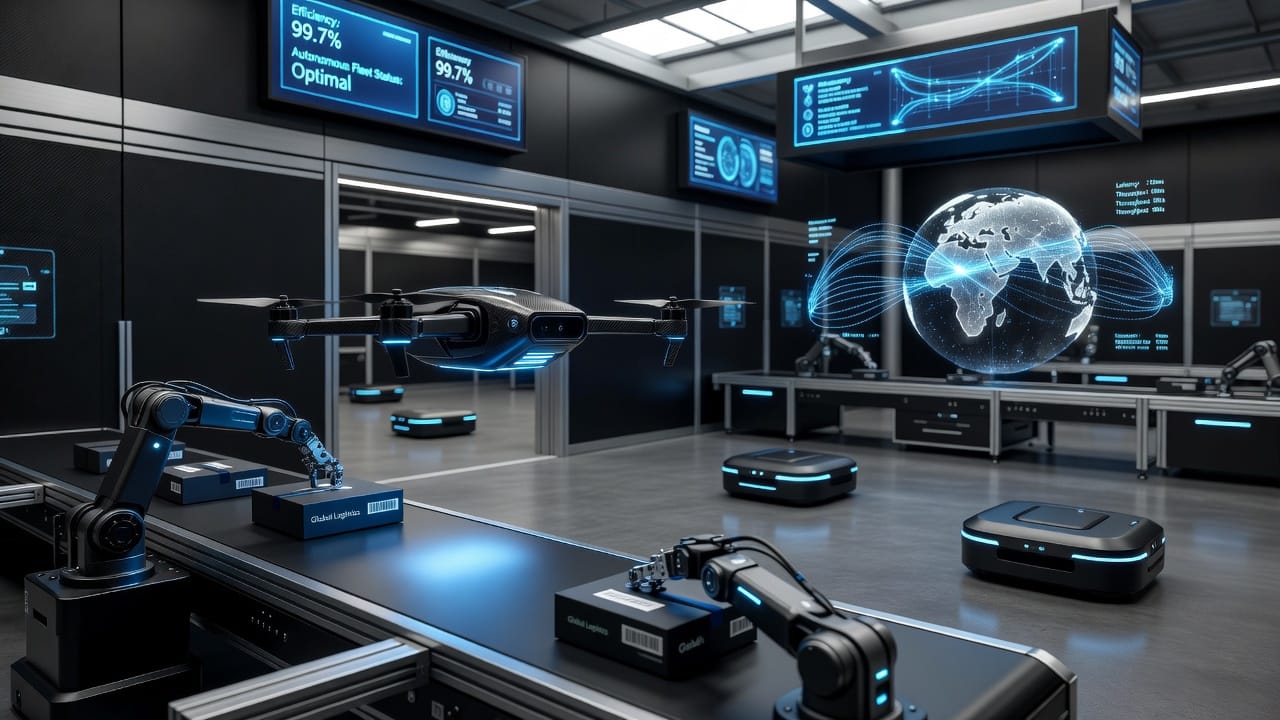
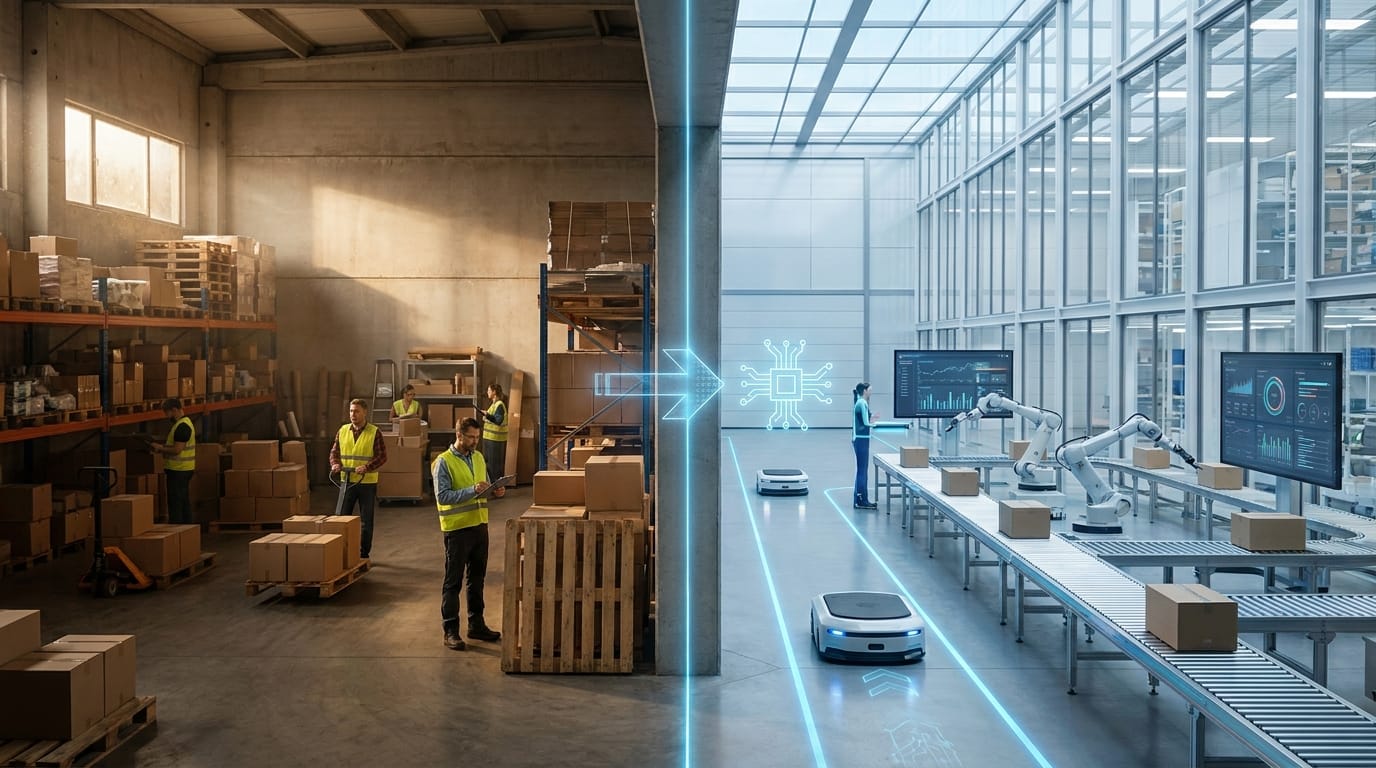
This goes beyond simple pick-and-pack robots. AI agents orchestrate autonomous mobile robots (AMRs), optimize storage allocation based on demand, manage robotic arms for complex tasks, and even predict equipment maintenance needs. This intelligent orchestration minimizes human error, speeds up throughput, and creates a safer working environment. The goal is a 'lights-out' warehouse where operations are largely autonomous and self-optimizing.
3. Predictive Demand Forecasting
Traditional forecasting models often rely on historical sales data, which can be reactive. AI agents, however, integrate external factors like social media sentiment, news trends, competitor actions, and macroeconomic indicators to provide highly accurate, predictive demand forecasts. This allows for proactive inventory management, reducing stockouts and overstocking, both of which are significant cost drivers.
4. Real-Time, Proactive Shipment Tracking
Shipment tracking has evolved from a passive 'where is it?' to an active 'where will it be and what might happen?' AI agents monitor shipments in real-time, not just for location, but for potential delays caused by weather, customs issues, or carrier performance. They can then proactively alert stakeholders and even initiate contingency plans, such as rerouting or finding alternative transport, before a disruption impacts the end customer.
5. Granular Inventory Intelligence
AI agents provide a level of visibility and intelligence into inventory that was previously unattainable. They can analyze inventory movement patterns, predict obsolescence, optimize stock levels across multiple locations, and even suggest optimal reorder points based on predicted demand and lead times. This transforms inventory from a static asset into a dynamic, intelligently managed resource.
6. Automated Procurement Processes
The procurement process, often bogged down by manual tasks, is ripe for AI-driven transformation. AI agents can automate vendor selection based on performance metrics, negotiate pricing, manage purchase orders, and even detect fraudulent activities. By analyzing market trends and historical data, they can secure better deals and ensure a more resilient supply of necessary goods and raw materials.
7. Unified End-to-End Supply Chain Visibility
Perhaps the most profound impact is the creation of true end-to-end visibility. AI agents can integrate data from disparate systems - from raw material suppliers to the final delivery to the customer - creating a single, intelligent source of truth. This holistic view enables comprehensive analysis, strategic decision-making, and rapid response to any anomaly across the entire chain. It moves us from a siloed operational view to a connected, intelligent ecosystem.
The Actionable Sequence to AI-Powered Logistics Mastery
Embracing AI in logistics isn\'t about flipping a switch. It's a strategic journey. I\'ve observed a successful pattern across numerous implementations:
- Define Clear Objectives: What specific pain points are you trying to solve? Is it cost reduction, delivery speed, inventory accuracy, or something else?
- Data Infrastructure Audit: AI thrives on data. Assess your current data quality, availability, and integration capabilities. Invest in robust data management systems.
- Phased Implementation: Start with a pilot program focused on one or two key pillars, such as route optimization or demand forecasting. Measure results rigorously.
- Integrate and Scale: Once successful, gradually integrate AI agents across other pillars, ensuring seamless data flow and system interoperability.
- Continuous Learning and Adaptation: AI systems are not static. Foster a culture of continuous learning, allowing agents to refine their algorithms and adapt to evolving market conditions.
"The true power of AI in logistics isn\'t just about automating tasks; it\'s about augmenting human decision-making with unparalleled data-driven insights, enabling us to navigate complexity with unprecedented agility and foresight."
A Micro-Story: From Chaos to Clarity in a Flash
Consider a mid-sized e-commerce firm in Gujarat that was constantly battling stockouts of popular items, leading to lost sales and frustrated customers. Their manual inventory checks and basic forecasting were no match for fluctuating online trends. We implemented an AI agent that analyzed real-time sales data, social media buzz surrounding their products, and even competitor pricing. Within weeks, the agent began sending proactive alerts: 'Projected demand for Product X to spike by 40% in 72 hours due to influencer campaign. Recommend increasing stock by 30% in Western India warehouse.' Following these recommendations, their stockout incidents dropped by 70%, and customer satisfaction scores saw a marked improvement. This wasn\'t magic; it was intelligent foresight, enabled by AI agents.
The Expert Perspective: Beyond Automation to Autonomy
The trend is clear: we are moving from 'automation' to 'autonomy' in logistics. Autonomous logistics, powered by sophisticated AI agents, means systems that can not only perform tasks but also learn, adapt, and make critical decisions with minimal human intervention. This is crucial for resilience in our current global market, which is increasingly susceptible to unforeseen events like geopolitical shifts, climate impacts, and pandemics. As [McKinsey & Company](https://www.mckinsey.com/capabilities/operations/our-insights/the-future-of-logistics-and-supply-chain-management) has highlighted, companies that embrace digital transformation and intelligent technologies are significantly better positioned to weather these storms and emerge stronger.
The Future is Intelligent, Scalable, and Indianic
The journey towards autonomous logistics is not a distant dream but a present reality. For businesses in India and globally, the opportunity to leverage AI agents for unparalleled efficiency and resilience is immense. At Indianic.com, we are dedicated to developing and implementing cutting-edge AI agent and logistics automation solutions tailored to your unique needs. We focus on building scalable, future-ready systems that not only address your current challenges but also position you for sustained growth in the dynamic global market. We understand the intricacies of both technological innovation and operational execution.
The true test of leadership in this era is not just about adapting to change, but about actively shaping it. AI agents are the tools that empower us to lead the transformation in logistics and supply chain management.
How will you leverage the power of AI agents to transform your logistics operations in the next 12 months? Share your thoughts in the comments below or discuss with your leadership team.
Visit [Indianic.com](https://www.indianic.com/) today to explore how our expert solutions can revolutionize your supply chain and drive your business forward.