
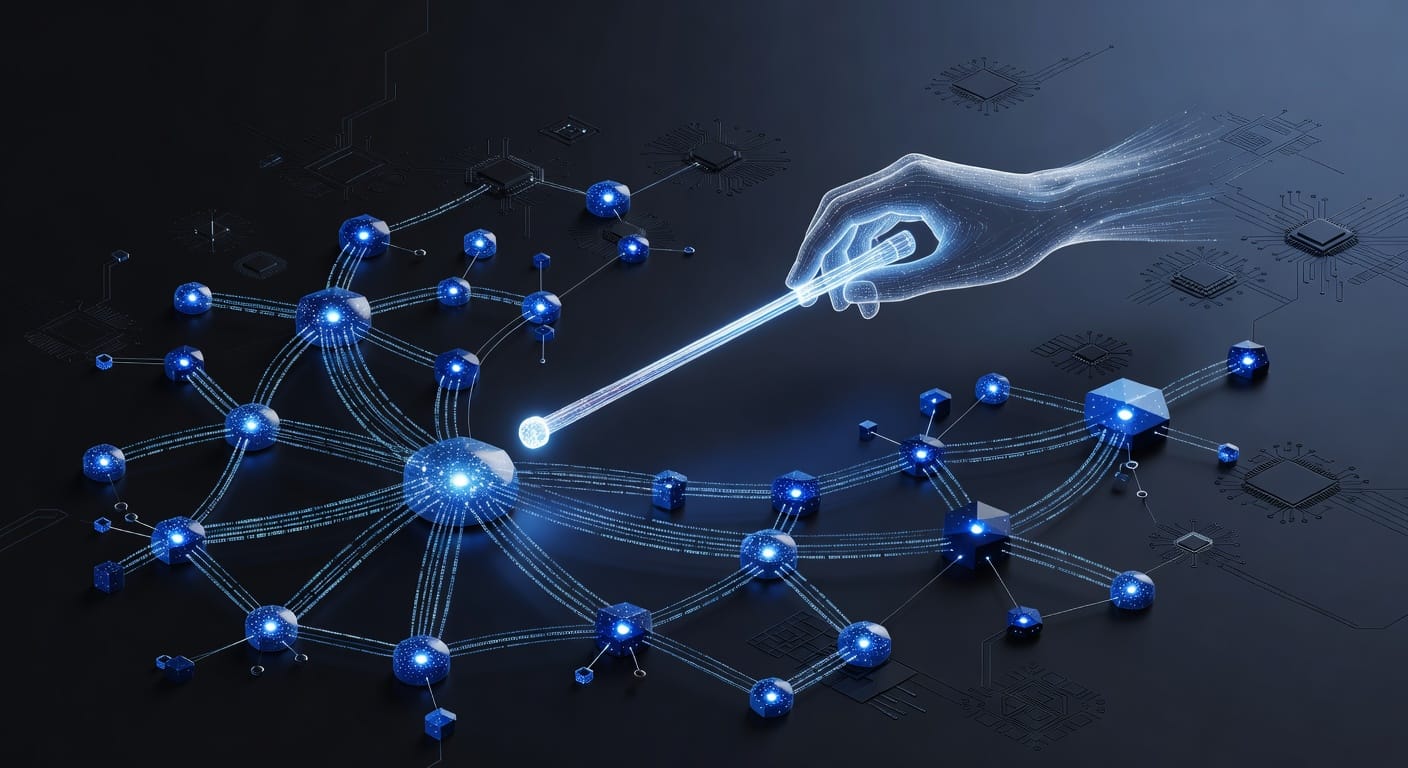
The notion that artificial intelligence will simply replace software engineers is a dangerous oversimplification that many in our industry are embracing. I've spent over 17 years driving AI innovation for governments and enterprises, and what I see is not an end, but a profound transformation. The future of software development isn't about engineers becoming obsolete; it's about them evolving into conductors of AI-powered symphonies. This is the essence of agentic engineering, the paradigm shift that moves us beyond the informal 'vibe coding' to a more structured, powerful future.
Dispelling Myths: The AI Revolution Isn't About Automation Alone
Let's address some common misconceptions. First, the idea that AI can independently develop complex software from a vague idea is still largely science fiction. While AI coding agents are incredibly powerful, they are tools. The 'vibe coding' approach, where developers rely heavily on intuition and iterative guesswork without a strong architectural foundation, becomes exponentially more risky when amplified by AI. The second myth is that AI will make engineering expertise redundant. On the contrary, I've observed that as AI takes on more of the low-level tasks, the need for strategic thinking, architectural design, and rigorous oversight becomes paramount.
My experience with entities like the Prime Minister's Office in the UAE has taught me that true digital transformation hinges on understanding the complex interplay between technology and human governance. Simply automating without thoughtful design leads to brittle systems. The speed at which AI can generate code means that a poorly conceived architecture or a lack of diligent review can now result in flawed systems at an unprecedented scale. This is where 'vibe coding' meets its reckoning.
The Conductor's Baton: Orchestrating AI Agents for Engineering Excellence
Agentic engineering redefines the software developer's role. Instead of writing every line, they become orchestrators, much like a symphony conductor. They lead a diverse ensemble of AI agents: specialized coding assistants for frontend and backend, AI-driven security reviewers, automated testing bots, documentation generators, and even AI architecture advisors. The developer's skill lies in harmonizing these agents, ensuring that each contributes to the overall composition with precision, creativity, and adherence to the score - the project requirements and architectural blueprint.
Imagine a concert hall where each musician plays perfectly, but without a conductor. The result is often discordant. The modern engineer, acting as the conductor, ensures the timing of the frontend agent aligns with the backend logic, that the security agent's insights are integrated seamlessly, and that the entire performance is cohesive. This requires a deep understanding of each agent's capabilities and how they collectively contribute to the final product. The future of software engineering demands this elevated level of strategic control.

The Principles of Precision: Building with Agentic Engineering
Achieving the promise of agentic engineering requires more than just deploying AI tools. It's about embedding a disciplined methodology into your AI development workflow. The core principles I advocate for are:
1. Visionary Requirements Refinement: The process begins with human insight. Clearly defining the problem, understanding user needs, and articulating the desired outcomes is the critical first step. This is where the 'score' for our AI orchestra is written.
2. Architectural Acumen: A robust, scalable, and secure architecture is non-negotiable. This architectural thinking guides the AI agents, ensuring the system is built on a solid foundation, not on shifting sands.
3. Masterful Prompt Engineering: The ability to communicate precise instructions to AI agents is a new form of expertise. This involves understanding how to craft contextually rich prompts that elicit the desired responses from AI coding agents and other specialized tools.
4. Rigorous Auditing and Quality Assurance: Every piece of AI-generated code, every architectural decision, must be subjected to stringent review. This includes leveraging AI code review tools alongside experienced human engineers and QA professionals to validate functionality, performance, and security.
5. Strategic Security Integration: Security cannot be an afterthought. AI agents can assist in identifying vulnerabilities, but human security experts must lead the strategy, ensuring comprehensive protection against evolving threats.
6. Performance Optimization & Regression Validation: AI can suggest performance improvements, but the nuanced task of optimizing complex systems and ensuring new code doesn't break existing functionality (regression validation) requires expert human oversight.
7. Continuous Monitoring & Evolution: Post-deployment, AI can aid in monitoring system health, but human engineers are essential for interpreting alerts, diagnosing issues, and orchestrating updates and improvements.
Agentic Engineering in Enterprise Arenas
The application of agentic engineering is already transforming critical enterprise sectors:
Large-Scale SaaS Platforms: Developing and iterating on complex SaaS solutions for millions of users demands precision. AI agents accelerate feature development, but human architects and engineers ensure scalability, security, and maintainability across the entire platform.
ERP Systems: Integrating sophisticated business processes requires meticulous planning. Agentic engineering allows for modular development and validation of AI-generated components, with human experts ensuring business logic accuracy and system-wide coherence.
Fintech Innovation: In finance, where security and regulatory compliance are paramount, the human element in agentic engineering is irreplaceable. AI can draft transaction logic or reporting modules, but seasoned professionals must meticulously review and validate every aspect for accuracy and adherence to stringent financial regulations. A report from McKinsey highlights the critical role of human oversight in AI adoption within finance.
Healthcare Solutions: The stakes are incredibly high in healthcare. AI can accelerate the development of diagnostic tools or patient management systems, but the critical validation of medical accuracy, patient data privacy, and system reliability must be led by human experts.
AI-Powered DevOps Pipelines: While AI can automate many DevOps tasks, the strategic design, management, and security of these pipelines remain the domain of skilled engineers. Agentic engineering enhances these pipelines, making them more efficient and resilient, but human oversight ensures alignment with business objectives and robust governance.
For example, in building a scalable SaaS platform, my team once faced a critical integration challenge. We leveraged AI coding agents to rapidly prototype several API integration modules. However, it was our senior engineers, acting as conductors, who architected the overall integration strategy, meticulously reviewed the AI-generated code for edge cases, and ensured seamless data flow between disparate systems. This process was significantly faster than traditional methods, but its success was entirely dependent on human expertise in orchestration and validation.
My firm belief, honed over years of implementing AI in sensitive government and enterprise contexts, is that AI is an unparalleled amplifier of human capability. It's not about relinquishing control, but about gaining a more powerful set of tools to execute a well-defined vision. The future belongs to those who can wield these tools with discipline and strategic intent.
The Perils of Blind AI Trust
It's tempting to believe that AI can handle everything, especially when faced with tight deadlines. However, entrusting AI-generated code without proper governance, architecture review, and human validation is akin to letting an inexperienced musician conduct a critical performance. The speed of AI can rapidly propagate errors, security flaws, and architectural weaknesses across an entire system, leading to significant technical debt, costly rework, and potential breaches. This is why the experienced engineer, the one who understands the 'why' behind the code, is indispensable.
IndiaNIC: Your Partner in Agentic Engineering Transformation
At IndiaNIC, we empower organizations to embrace this future. We are more than just a development partner; we are your strategic ally in navigating the complexities of AI transformation. We help you merge the extraordinary speed of AI coding systems with the unwavering discipline of human engineering, ensuring you build scalable, secure, and production-ready systems.
Our expertise spans:
- Implementing and optimizing AI coding agents for your specific workflows.
- Building secure, robust infrastructure for AI-driven development.
- Creating and managing AI-powered DevOps pipelines for unparalleled efficiency.
- Ensuring enterprise-grade software quality through AI testing automation and expert human QA.
- Providing architecture consulting to design for scalability and AI integration.
- Empowering your teams with the skills for effective agentic engineering.
The future of software engineering is here, and it's about intelligent orchestration. It's about leveraging AI to amplify human ingenuity. Are you ready to move beyond 'vibe coding' and lead your organization into this new era?
To understand how agentic engineering can revolutionize your development process, take the first step today. Within the next 24 hours, schedule a 30-minute discovery call with our AI strategy team by emailing hello@indianic.com. Let's explore your vision.