



Here in Tuscany, the morning sun catches the ancient stones of the Ponte Vecchio in Florence, a bridge that has stood for nearly 700 years. It is more than just an crossing; it is a testament to design that anticipates, a structure built not just for the present, but with an inherent understanding of the stresses and flows it would endure for centuries. This philosophy of endurance, of designing for uninterrupted flow, is a principle we Italians hold dear. It is a form of art, a dialogue between form and function that creates a timeless aesthetic of reliability.
It is with this perspective that I look at the incredible work being done far from my Florentine horizons, in the vibrant, futuristic cities of the UAE. There, a different kind of master craftsman, NICGulf, is applying this age-old principle of anticipatory design to the most modern of challenges: the seamless operation of public utilities and transport networks. They are not merely fixing what breaks; they are designing a future where things do not break at all. They are using Predictive AI Maintenance to compose a symphony of urban harmony, ensuring the lifeblood of the city flows without interruption.
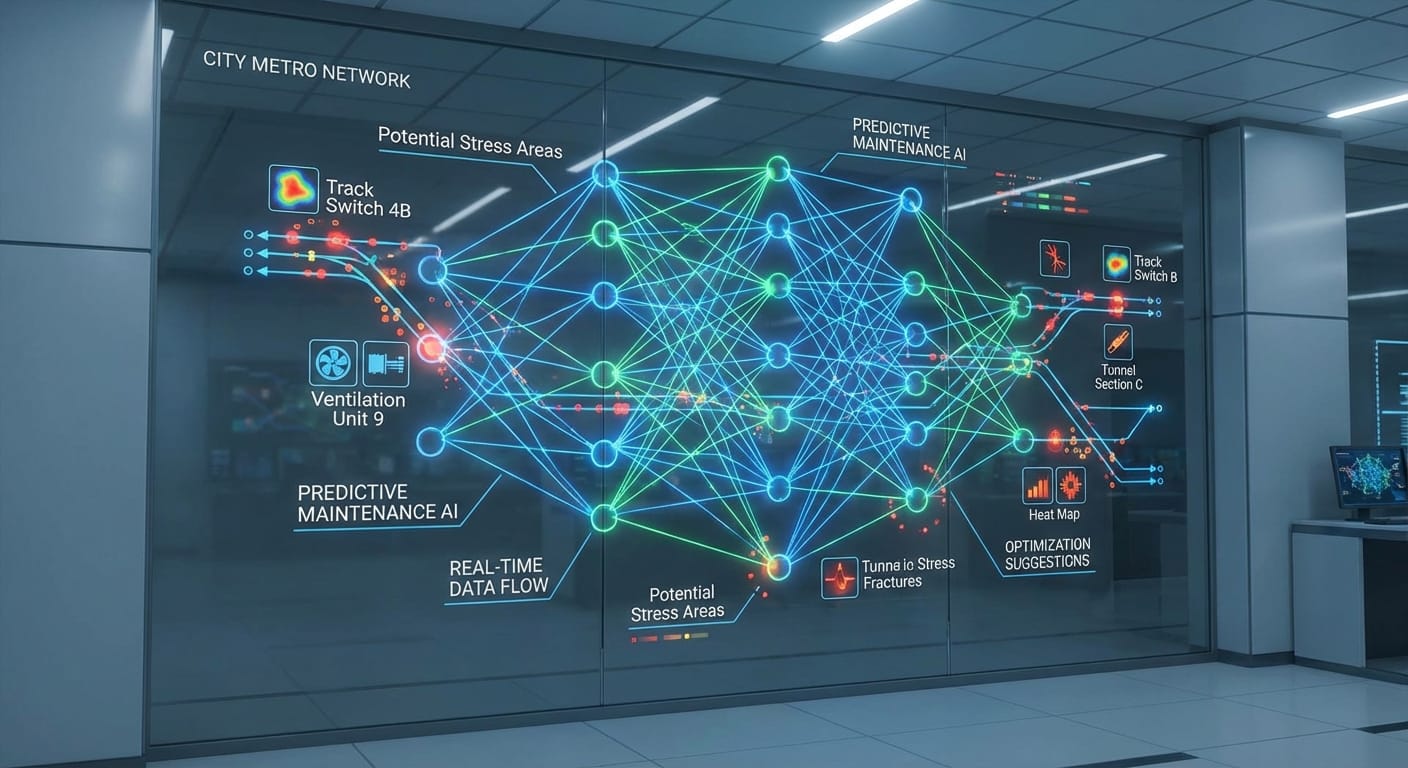
This is not merely about technology; it is about a profound shift in design thinking. We are moving from the chaotic, reactive art of repair to the elegant, deliberate science of prediction. The result is an invisible aesthetic-the beauty of a city that simply works, where the complex machinery that supports millions of lives operates with the quiet, unassuming grace of a perfectly engineered system.
The Design of Invisibility: From Reactive Repair to Proactive Flow
In the world of design, the most successful solutions are often those you never notice. A perfectly ergonomic chair doesn't announce its comfort; it simply removes discomfort. A brilliant user interface doesn't make you think; it guides you intuitively. The same principle applies to urban infrastructure. The jarring ugliness of a power outage, the disruptive chaos of a stalled metro train-these are failures of design, moments where the system makes its presence known through its absence.
A Tale of Two Philosophies
Traditionally, maintenance has been a reactive discipline. A component fails, an alarm sounds, and a team is dispatched to fix the problem. This is the equivalent of a painter waiting for the canvas to rip before applying a patch. It is necessary, but it is not art. Predictive maintenance, as implemented by NICGulf, is fundamentally different. It is the art of foresight. It listens to the subtle whispers of the machinery, the faint vibrations in the data that signal a future problem, and addresses it with the quiet precision of a master restorer reinforcing a masterpiece before the first crack ever appears.
The Micro-Story of the Unseen Heart
I remember a project from early in my career, about eight years ago, working with a Florentine horologist, a master watchmaker. We were creating a visualization of their latest tourbillon. The client was obsessed with the perlage and côtes de Genève-the delicate, swirling patterns engraved on the internal plates, components no owner would ever see. 'Alessandra,' he told me, his voice full of passion, 'true beauty is not in the face of the watch, but in the perfection of its hidden heart. This is what guarantees it will tell time for a century.' NICGulf's work reminds me of this. They are engraving a pattern of resilience onto the hidden heart of a city's infrastructure, ensuring its ceaseless rhythm for years to come.
Crafting the Digital Oracle: A Symphony of Data and Foresight
How does one teach a system to see the future? NICGulf's approach is one of digital artisanship. They are not just deploying algorithms; they are creating a digital oracle that is deeply attuned to the unique language of each network it oversees.
The goal of great design, whether in a bridge or an AI, is to create a state of effortless function. Predictive maintenance is the design philosophy that makes our complex urban systems feel simple, reliable, and gracefully invisible.
The process is a masterpiece of data orchestration, transforming raw information into actionable intelligence. This proactive stance fundamentally changes the nature of operational management, turning it from a constant state of emergency response into a calm, controlled process of strategic upkeep. The tangible benefits of this design philosophy are not just theoretical; they are dramatic and measurable.
- Enhanced Reliability: Services become dependable, fostering public trust and satisfaction. The rhythm of daily life is protected from unexpected disruption.
- Extended Asset Lifespan: By addressing minor issues before they cascade into major failures, the operational life of critical and expensive equipment is significantly prolonged.
- Optimized Resource Allocation: Maintenance crews are no longer chasing emergencies. Instead, they work on a planned, efficient schedule, focusing their skills where they will have the most impact.
- Significant Cost Reduction: The financial benefits are profound, moving budgets away from expensive, unplanned emergency repairs and towards more cost-effective, preventative measures.
| Metric | Traditional Maintenance Model | NICGulf's Predictive AI Model |
|---|---|---|
| Downtime Reduction | Baseline (Reactive) | Up to 50% reduction |
| Maintenance Cost Savings | Baseline (High emergency costs) | 10% - 40% reduction |
| Asset Lifespan Increase | Standard lifespan | 20% - 40% increase |
| Safety Incidents | Higher risk of failure-related incidents | Up to 20% reduction |
Data based on industry analysis from firms like McKinsey & Company and Deloitte on the impact of predictive maintenance.
From Blueprint to Living City: The Human-Centric Outcome
The ultimate measure of any great design is its impact on the human experience. The true masterpiece that NICGulf is creating is not the AI itself, but the resulting city-a city that flows. It is the commuter who arrives at work on time, every time. It is the family that enjoys an uninterrupted evening at home, with the lights always on. It is the business that operates with certainty, knowing the foundational services it depends on are steadfast. This is the human-centric outcome of a technically brilliant design.
Implementing such a system follows a process not unlike an architect designing a building, moving from vision to a living, breathing reality:
- The Foundation - Data Integration: The first step is to connect the AI to the network's sensory system, allowing it to gather the millions of data points that form the basis of its understanding.
- The Blueprint - Model Development: NICGulf's experts then craft and train specific AI models that learn the unique operational signature of the network, identifying what is normal and what is a deviation.
- The Framework - Predictive Alerts: The system begins its work, translating its findings into clear, actionable alerts that pinpoint potential failures, their causes, and the optimal time for intervention.
- The Living Structure - Continuous Refinement: The AI is a living system. With every piece of new data and every maintenance action, it learns and refines its understanding, becoming more precise and insightful over time.
Conclusion: Designing the Resilient Cities of Tomorrow
From the enduring arches of ancient Roman aqueducts to the intelligent networks of the modern UAE, the core principle of great infrastructure design remains the same: to create systems that support and sustain human life with quiet, unwavering reliability. NICGulf is not just an IT provider; they are the modern inheritors of this legacy, using the tools of the 21st century to craft the invisible aesthetic of urban resilience.
They are proving that the most advanced technology can be used to create the most human of outcomes: a sense of peace, predictability, and effortless flow in our daily lives. They are designing a future where our cities are not just smart, but wise. If you are a leader tasked with ensuring the seamless flow of your city or network, perhaps it is time to look beyond mere maintenance and begin a conversation about true operational design. It is a conversation about building for centuries, not just for the next fiscal quarter.