

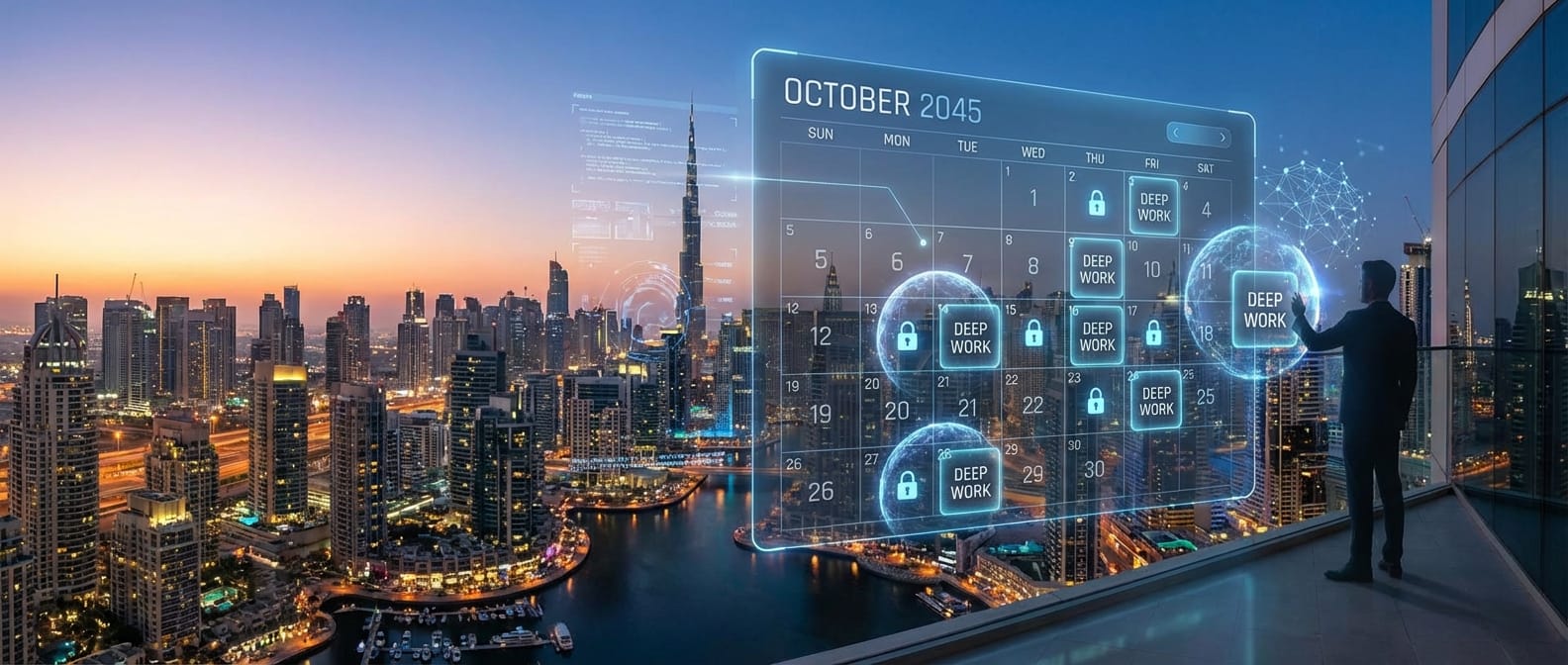
In my two decades of leadership in the global tech space, I've observed a paradox that plagues even the most brilliant executives: their calendars are packed, yet their most critical work remains undone. We attend back-to-back meetings, triage endless emails, and fight daily fires, mistaking this flurry of activity for productivity. In a market as fiercely competitive and fast-paced as the GCC, particularly in innovation hubs like Dubai's Business , this isn't just a bad habit-it's a critical business vulnerability.
The traditional calendar is a passive record of our obligations, easily hijacked by the priorities of others. It tells us where we need to be, but it fails to protect the one resource we can never get back: our time for deep, focused work. This is the work that drives digital innovation, solves complex problems, and ultimately, separates market leaders from the rest. At NICGulf, we recognized that to lead in this environment, we had to move from passively managing our time to actively orchestrating it. The solution wasn't another productivity app; it was a fundamental shift powered by artificial intelligence.
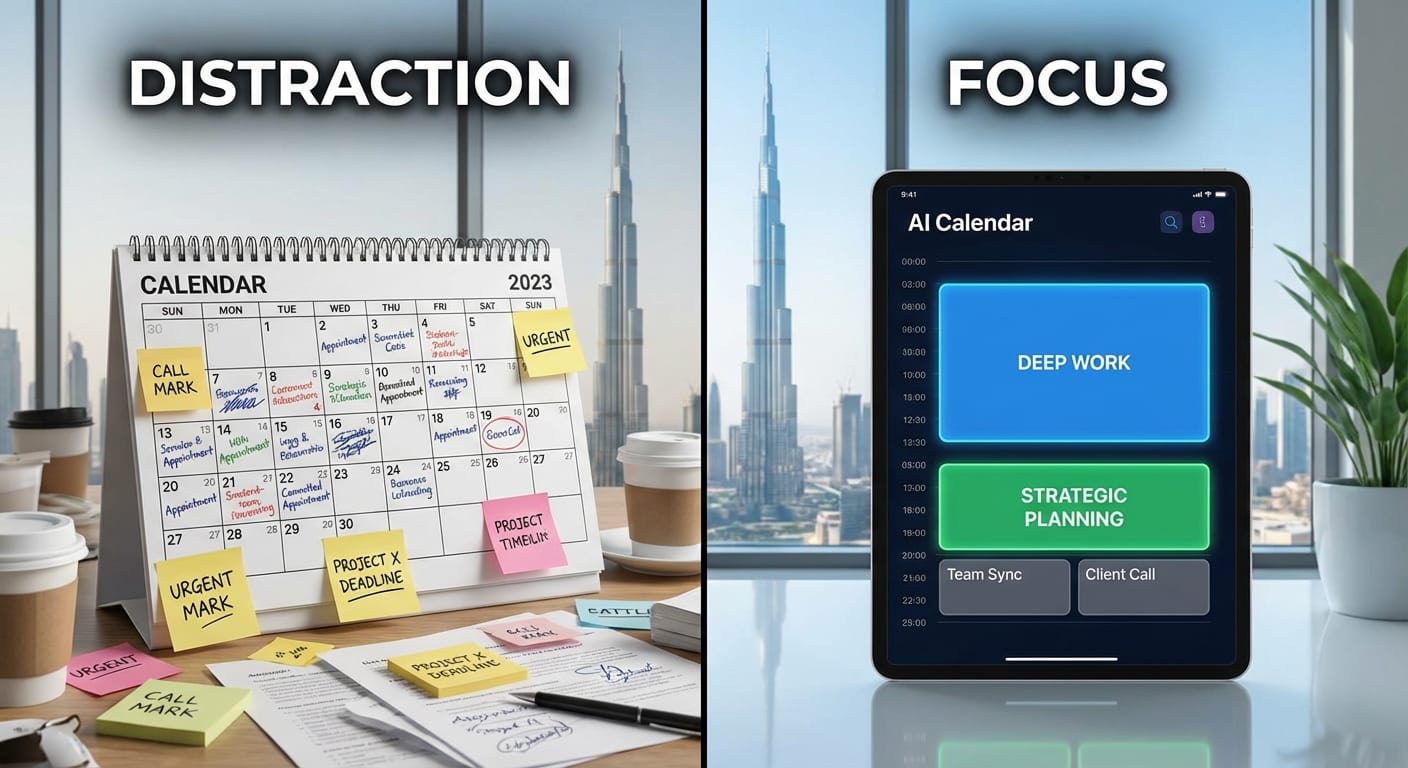
By leveraging AI-powered calendars like Motion and Reclaim.ai, our leaders are not just scheduling meetings; they are building intelligent, adaptive frameworks for their entire work week. They are defending their focus, automating low-value decisions, and ensuring that strategic priorities are no longer just items on a to-do list, but protected blocks of time where real progress happens.
The Tyranny of the Open Calendar: Why Old Habits Fail in the New GCC
For years, the default approach to time management has been reactive. An open slot in the calendar was an invitation for a meeting, a problem, or a distraction. The cost of this approach is staggering, primarily due to what psychologists call "context switching." Every time we are pulled from a complex task to answer a quick email or join an unscheduled call, our brain expends significant mental energy disengaging and re-engaging. In a high-stakes tech environment, this constant fragmentation of focus is the enemy of innovation.
I'm reminded of a project early in my career, around the mid-2000s. We were developing a complex e-commerce platform for a major retail client. Our lead architect was a genius, but his calendar was a disaster. He was constantly being pulled into non-essential meetings and sales calls. His "deep work" on the core system architecture was fragmented into tiny 30-minute chunks between other commitments. The result? A series of small but critical logical flaws in the initial build that led to a two-month delay and significant cost overruns. We had the right talent, but we failed to protect their focus. Today, an AI calendar would have been his gatekeeper, automatically defending the four-hour deep work sessions he needed to build a robust foundation from the start.
From Reactive Agendas to Proactive Innovation
In the GCC, where giga-projects and rapid digital transformation are the norms, the cost of fragmented focus is amplified. The speed of business in Dubai doesn't allow for the slow, incremental progress that comes from scattered effort. Leaders need sustained periods of concentration to strategize, innovate, and lead their teams effectively. This is where the limitations of traditional calendars become a strategic bottleneck, preventing organizations from reaching their full velocity.
The AI Revolution in Your Schedule: Your Intelligent Time Orchestrator
AI-powered calendars represent a paradigm shift. Unlike a traditional calendar, which is essentially a static list, tools like Motion and Reclaim.ai act as dynamic, intelligent assistants. You provide the inputs-your tasks, their priorities, and your deadlines-and the AI handles the complex work of scheduling them around your existing meetings and commitments. If a conflict arises, the AI doesn't just flag it; it automatically reshuffles your entire schedule to ensure every priority is still accommodated.
The goal of an AI calendar is not just to manage your time, but to orchestrate your focus. It transforms your schedule from a record of your obligations into a strategic plan for your highest-impact work, and then defends that plan relentlessly.
This intelligent automation unlocks several key benefits that are crucial for leaders in the fast-paced tech industry:
- Defense of Deep Work: The AI automatically finds and blocks out the multi-hour sessions required for strategic planning, coding, or creative problem-solving, protecting this time from inbound meeting requests.
- Automated Task Scheduling: Instead of manually dragging tasks into calendar slots, you simply add them to a list. The AI assesses priority and deadlines to find the optimal time for completion.
- Dynamic Rescheduling: When an urgent meeting pops up, the system instantly recalculates your day and moves lower-priority tasks, so you never have to wonder when you'll catch up.
- Realistic Workload Assessment: By visualizing all your tasks and meetings in one place, the AI helps you see if you've overcommitted, preventing burnout and ensuring deadlines are realistic.
The NICGulf Methodology: Activating Your AI Time-Blocking Engine
Adopting an AI calendar is more than just downloading a new tool; it requires a disciplined methodology to maximize its impact. At NICGulf, our leaders follow a clear process to transform their schedules into engines of productivity. This approach has led to a measurable improvement in our ability to execute on complex digital innovation projects.
| Performance Metric | Before AI Calendar (Average Manager) | After AI Calendar (NICGulf Pilot Group) | Percentage Improvement |
|---|---|---|---|
| Weekly Deep Work Hours | ~4 Hours | 12+ Hours | 200% Increase |
| Daily Context Switches | 30+ | < 10 | 66% Reduction |
| Time Spent Manually Scheduling | 3-5 Hours/Week | < 30 Minutes/Week | 90% Reduction |
| Project Milestone Adherence | 75% On-Time | 92% On-Time | 22% Increase |
Data based on internal analysis of NICGulf leadership productivity metrics, 2024.
A Leader's 4-Step Guide to Implementation
You can begin implementing this system in your own workflow with these four steps:
- Centralize Your Tasks: Conduct a complete "brain dump" of every task, project, and commitment, both professional and personal. Input all of them into your chosen AI calendar's task list. The system can only manage what it knows about.
- Set Your Priorities and Deadlines: Go through your task list and assign a priority level (e.g., Low, Medium, High, Critical) and a hard deadline for each item. This data is the fuel for the AI's decision-making engine.
- Define Your Ideal Week: Configure your working hours and define your goals. For example, you might tell the AI you want to dedicate at least 10 hours per week to "Strategic Planning" and no more than 15 hours to "Internal Meetings." The AI will then build a schedule that honors these constraints.
- Trust, but Verify: At the start of each day, take five minutes to review the schedule the AI has built for you. You are still the strategist. Make any necessary adjustments, and then commit to executing the plan. The key is to let the AI handle the logistics so you can focus on execution.
Conclusion: Stop Managing Time, Start Directing Success
In the relentless pace of the GCC's digital economy, the leaders who win will be those who master their focus. The battle for market leadership is won not in a flurry of chaotic activity, but in the quiet, concentrated hours of deep work where true value is created. Traditional time management tools are no longer sufficient for this challenge.
By embracing AI-powered time blocking, you are making a conscious choice to protect your most valuable asset. You are trading the draining work of manual scheduling for the high-impact work of strategy and innovation. This is more than a productivity hack; it's a modern leadership discipline. Are you ready to stop managing your calendar and start orchestrating your success? Your next breakthrough depends on it.