


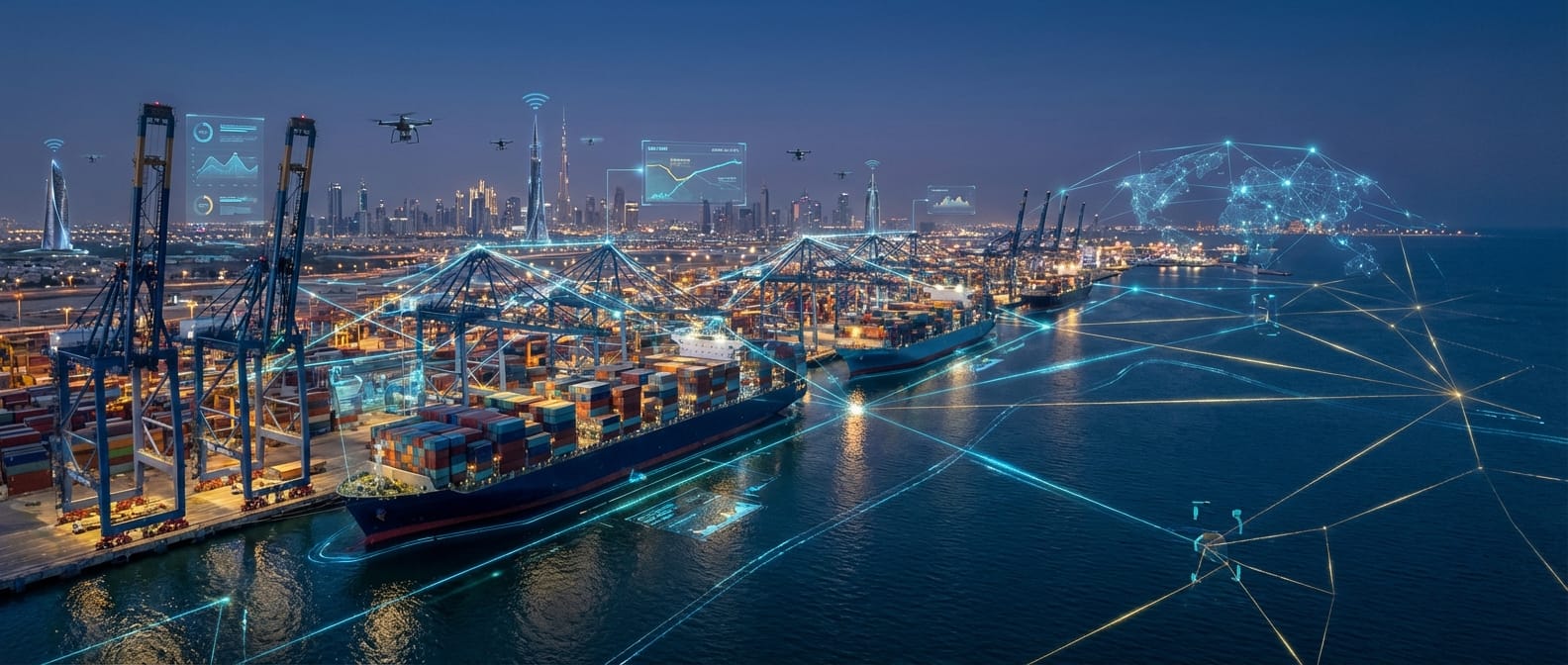
Standing at the edge of Jebel Ali Port, watching thousands of containers being orchestrated with the precision of a symphony, you get a real sense of the scale of global trade. For over 20 years, I've been helping businesses harness technology to connect with their customers, but the logistics sector, especially here in the UAE, presents a challenge of a different magnitude. The sheer volume of goods flowing through the world's busiest air and sea corridors is staggering. In this high-stakes environment, traditional methods of management are no longer enough. The question is no longer how to manage this complexity, but how to master it. The answer, unequivocally, is Artificial Intelligence.
The UAE has masterfully positioned itself as the nexus of global trade. It's a crossroads where East meets West, and its infrastructure is second to none. However, this strategic advantage brings immense operational pressure. Every delay, every miscalculation, every inefficiency has a ripple effect across the global supply chain. This is where we, as technology partners, see the most significant opportunity for transformation. AI isn't just about making things faster; it's about making the entire logistics ecosystem smarter, more predictive, and more resilient.
At IndiaNIC, and through our dedicated team at NICGulf in Dubai, we are on the front lines, developing the intelligent systems that will define the next era of logistics. We're moving beyond simply tracking shipments to creating self-optimizing supply chains that can anticipate challenges and adapt in real-time. This is not science fiction; this is the new competitive standard for any company operating in or through the UAE.
Deconstructing the AI-Powered Supply Chain
When we talk about AI in logistics, we're not referring to a single, monolithic solution. Instead, it's a suite of intelligent technologies working in concert to optimize every link in the supply chain. From the moment an order is placed to its final delivery, AI provides a layer of intelligence that was previously unattainable. For businesses in the UAE, this means turning their immense operational data into a powerful strategic asset.
Intelligent Route Optimization: Beyond the Shortest Path
For decades, route planning was about finding the shortest distance between two points. Today, that's a dangerously simplistic model. An AI-powered system analyzes millions of data points in real-time-live traffic patterns, weather forecasts, port congestion levels, and even variable fuel costs-to determine the most efficient route. This means not only faster delivery times but also significant cost savings and a reduced carbon footprint. For a fleet operating out of Dubai, this could mean dynamically rerouting a truck to avoid congestion on Sheikh Zayed Road or advising a cargo ship on the optimal speed to avoid docking delays at its destination port.
The Predictive Power of AI in Demand Forecasting
One of the biggest challenges in logistics is balancing supply and demand. Overstocking ties up capital and warehouse space, while understocking leads to lost sales and dissatisfied customers. AI-driven demand forecasting analyzes historical sales data, market trends, seasonal peaks, and even external factors like public holidays or global events to predict future demand with stunning accuracy. This allows businesses to optimize inventory levels, improve procurement strategies, and ensure they have the right products in the right place at the right time.
From Theory to Tangible Results: The Autonomous Warehouse
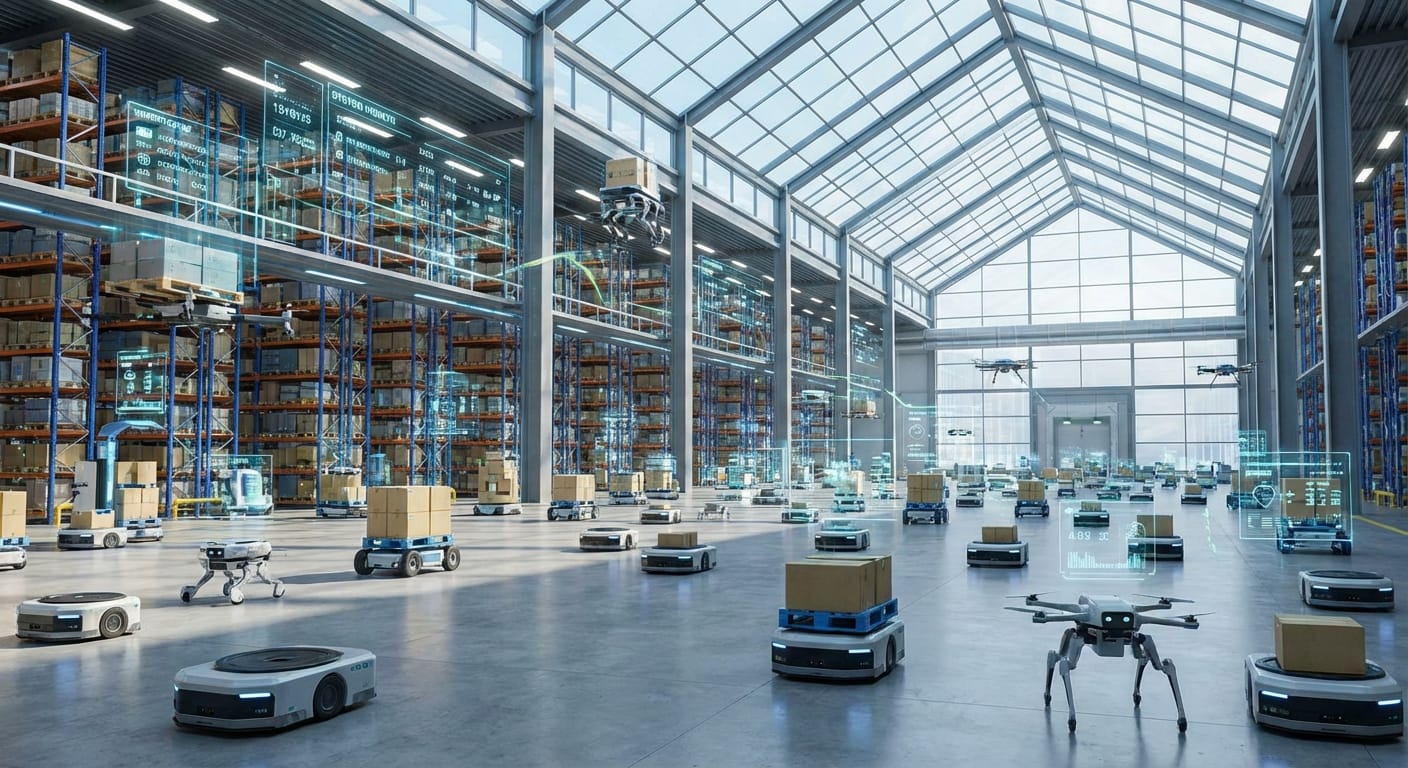
The modern warehouse is the beating heart of the supply chain, and AI is its pacemaker. Autonomous warehouse management involves using AI to orchestrate a fleet of robots for picking and packing, automated sorting systems, and intelligent inventory tracking that eliminates manual errors and dramatically increases throughput.
I recall a meeting a few years back with a major 3PL provider in Jebel Ali Free Zone. Their warehouse, a marvel of scale, was battling a silent killer: inefficiency. Picking errors were high, and their turnaround time for fulfilling orders was lagging behind competitors. They had the scale, but not the speed. We worked with them to integrate an AI-powered warehouse management system. Six months later, the director called me, not to report a problem, but to share that their picking accuracy had hit 99.8% and their order fulfillment speed had increased by 40%. That's the tangible power of this technology when applied correctly.
In the high-stakes world of global logistics, AI is the new currency of efficiency. But the trust that your data is secure and the system is reliable is the gold standard that backs it.
The difference between a legacy approach and an AI-driven one is not incremental; it's transformational. The data clearly shows the impact across key performance indicators.
| Metric | Traditional Logistics Systems | AI-Powered Logistics Systems |
|---|---|---|
| Demand Forecasting Accuracy | 65-75% | 90-95%+ |
| Route Efficiency | Static, pre-planned routes | Dynamic, real-time optimization (10-20% fuel savings) |
| Warehouse Picking Errors | ~1-3% | Below 0.1% |
| Inventory Turnover | Industry average | 25-50% Improvement |
The NICGulf Advantage: Building from the Heart of Global Trade
Developing effective logistics technology requires more than just coding expertise; it demands a deep, intrinsic understanding of the industry's real-world challenges. This is why our presence in Dubai with NICGulf is so critical. We are not just building solutions for the world's busiest corridors; we are building them from the world's busiest corridors. Our team lives and breathes the ecosystem. We see the lines of trucks waiting, we understand the complexities of customs clearance, and we engage directly with the people who manage the day-to-day flow of global trade. This proximity allows us to build solutions that are not only technologically advanced but also practical, robust, and tailored to the unique pressures of this environment.
For any organization looking to leverage AI in their logistics operations, the path forward requires a strategic approach. Here are a few key steps to consider:
- Conduct a Data Infrastructure Audit: AI thrives on data. Before you can implement any solution, you must understand the quality, accessibility, and security of your current data streams.
- Identify a High-Impact Pilot Project: Don't try to boil the ocean. Start with a specific, measurable challenge, such as optimizing a particular delivery route or improving inventory accuracy for a key product line.
- Prioritize Scalability and Integration: Ensure that any solution you implement can integrate seamlessly with your existing TMS, WMS, and ERP systems and can scale as your business grows.
- Partner with a Technology Expert: Work with a team that has proven experience in both AI and logistics. Your partner should understand not just the technology, but your business context.
Conclusion: Charting Your Course for the Future
The UAE's status as a global logistics leader was built on vision, investment, and strategic location. Maintaining and expanding that leadership in the coming decade will depend on its ability to embrace the next wave of technological innovation. Artificial Intelligence is the compass that will allow businesses to navigate the increasing complexity of global trade with unprecedented efficiency and foresight.
The technology is no longer on the horizon; it is here, and it is creating a clear divide between the leaders and the laggards. The opportunity is to build a more connected, predictive, and resilient supply chain that solidifies your competitive advantage on the world stage. At NICGulf, we are ready to help you chart that course. Are you ready to navigate the future of logistics? Let's connect and build a smarter supply chain together.