



Five Years in Dubai: Reflecting on a Market That Never Stands Still
As I mark five years since we solidified our presence with NICGulf in the heart of Dubai, I find myself reflecting on a journey that mirrors the city's own relentless ambition. With over two decades in the technology sector, I've witnessed digital revolutions on a global scale, but the pace and nature of change in the UAE are truly unique. Five years ago, a significant portion of our conversations revolved around developing standalone mobile applications or responsive websites. Today, those conversations have fundamentally shifted. We're no longer just building apps; we are architecting complex, interconnected digital ecosystems that serve as the central nervous system for modern enterprises.
This evolution from isolated services to integrated platforms isn't just a technological trend; it's a direct response to the rising expectations of the end-user and the competitive demands of the regional market. A simple e-commerce app is no longer enough. Businesses now require a seamless integration of their sales front-end with their ERP, CRM, supply chain logistics, and AI-powered analytics engines. The challenge has moved from merely building a functional product to engineering a resilient, scalable, and intelligent platform that drives growth. It's a challenge we've embraced, guiding our partners from a vision on a whiteboard to a living, breathing digital infrastructure.
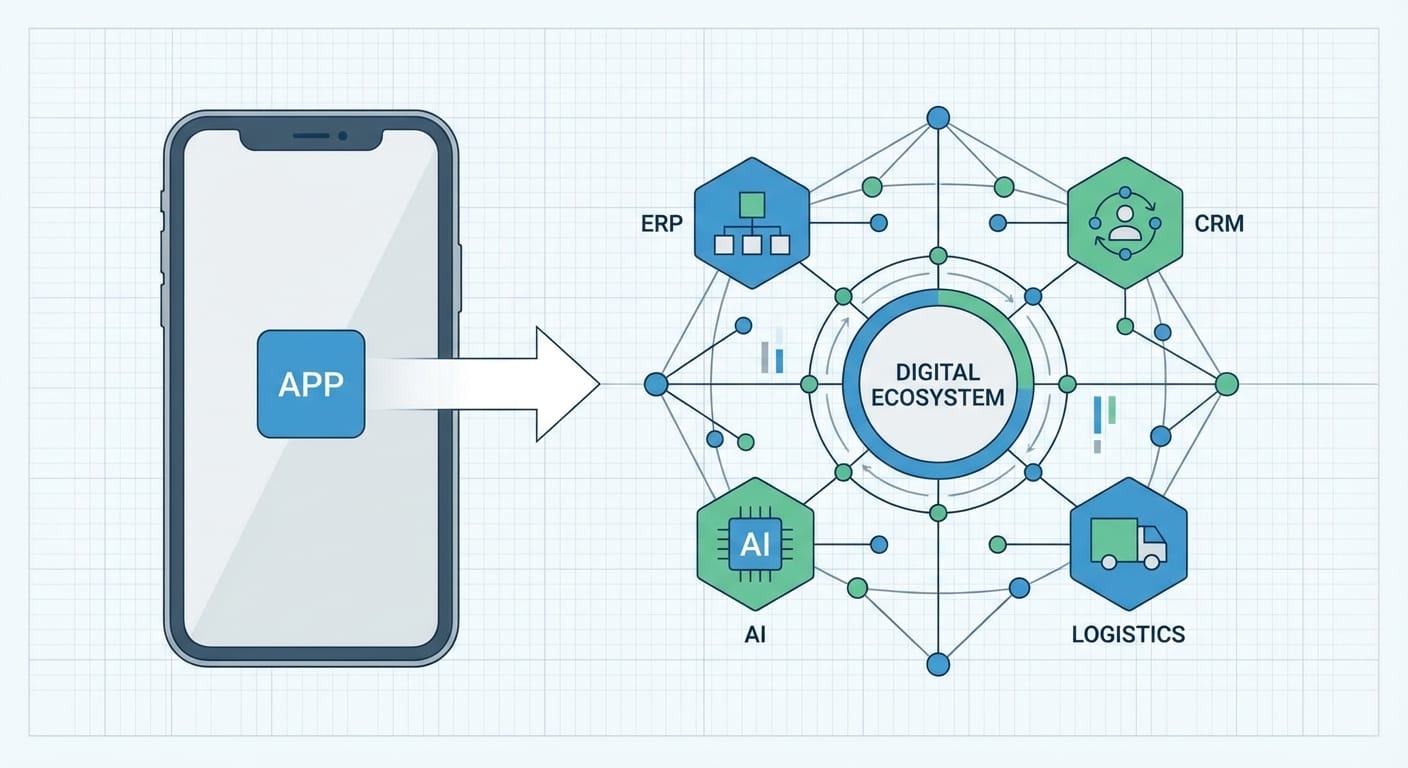
This complexity demands a new kind of partnership-one that transcends transactional, remote development. It requires a deep, symbiotic relationship that can only be forged through shared context and proximity. It's why establishing our base in Business Bay wasn't just a logistical decision; it was a strategic commitment to being at the epicenter of our clients' world, ready to collaborate, ideate, and solve problems in real-time.
The Proximity Principle: Why Your Partner's Address Matters in the UAE
In an age of global connectivity, it might seem counterintuitive to emphasize a partner's physical location. Yet, our experience has proven that for the high-stakes world of digital transformation in the UAE, proximity is a powerful catalyst for success. The nuances of business culture, the rapid pace of decision-making, and the need for agile, iterative development cannot be fully captured through video calls alone.
Beyond the Screen: The Tangible Value of In-Person Collaboration
I recall a project with a major logistics firm in the region. We were designing a complex platform to automate their warehouse operations using computer vision and IoT sensors. The remote sprint planning sessions were productive, but we kept hitting a conceptual wall when trying to map the digital workflow to the physical realities of their facility. After a week of back-and-forth, I flew my lead architect to Dubai. Standing on the warehouse floor with the client's operations manager, we sketched the entire system on a physical whiteboard in two hours. That single session, fueled by direct interaction and shared physical context, broke the deadlock and accelerated the project by weeks. This is the power of presence; it collapses communication gaps and builds a shared understanding that remote tools can't replicate.
Navigating the Local Landscape with a Local Guide
A true technology partner does more than write code. They must be fluent in the local regulatory and commercial environment. Understanding data sovereignty laws like the UAE's Personal Data Protection Law (PDPL), navigating local payment gateway integrations, and appreciating the subtleties of consumer behavior in the GCC are critical. A partner based in Business Bay is immersed in this context daily. They are part of the local business community, providing an invaluable layer of insight that protects your investment and ensures your solution is not just technically sound but also commercially and culturally viable.
Architecting for the Future: The Pillars of a Modern Digital Partnership
Building a lasting digital advantage requires a partnership model grounded in long-term thinking. The goal is not just to launch a product but to create a platform that can evolve with your business. This philosophy is built on several key pillars that we have refined over our years of operation in Dubai.
Value engineering in technology isn't about finding the cheapest hourly rate; it's about designing the most resilient and scalable system that delivers the lowest total cost of ownership and the highest long-term ROI.
Achieving this requires a commitment to a modern, agile framework and a focus on core principles that ensure success. We believe a successful partnership must include:
- An Agile and Transparent Methodology: Moving away from rigid, long-term plans to an iterative process with regular feedback loops allows for flexibility and ensures the final product is perfectly aligned with business needs.
- Scalable Cloud-Native Architecture: Building solutions on the cloud from day one ensures that your platform can handle growth without costly re-engineering, whether you're serving ten thousand users or ten million.
- Ironclad Security and Compliance: Integrating security protocols and data privacy considerations from the initial design phase, not as an afterthought, is non-negotiable in today's environment.
- Dedicated Long-Term Support: The relationship doesn't end at launch. A true partner provides ongoing maintenance, monitoring, and strategic guidance to ensure the platform continues to deliver value.
The difference between a deeply integrated local partner and a remote-only vendor is not just anecdotal; it's reflected in tangible project outcomes. Based on our analysis of enterprise projects in the region, the benefits are clear.
| Performance Metric | Remote-Only Vendor Model | Local Integrated Partner Model (NICGulf) | Observed Improvement |
|---|---|---|---|
| Project Delivery Time | Baseline | 15-20% Faster | Accelerated Time-to-Market |
| Requirement Misalignment Rate | 8-12% | Less than 2% | Higher Accuracy & Reduced Rework |
| Client-Vendor Communication Lag | 4-8 Hours (Avg) | Real-time / Same Day | Enhanced Agility |
| Post-Launch Critical Issue Resolution | 24-48 Hours | Under 4 Hours | Greater Business Continuity |
Your Roadmap to a Transformative Partnership
For UAE companies ready to embark on a meaningful digital transformation journey, choosing the right partner is the most critical decision you will make. To ensure you build a foundation for success, I recommend a structured approach:
- Start with Strategy, Not Technology: Clearly define the business outcomes you want to achieve. A good partner will first seek to understand your business goals, then propose the technology to get you there.
- Evaluate on Proximity and Cultural Fit: Assess a potential partner's local presence and their team's ability to integrate with yours. Do they understand your market? Can they sit in the same room with you to solve a problem?
- Demand an Agile Framework: Ensure the partner works in an agile, transparent manner. You should have full visibility into the project's progress at every stage and the flexibility to make adjustments as needed.
- Plan for a Long-Term Relationship: Look for a partner who is interested in your long-term success. Ask about their support models, their approach to scalability, and how they help clients navigate future technology shifts.
Conclusion: The Next Five Years and Beyond
Our first five years in Dubai have been a period of incredible learning and growth. We've seen the market mature from needing simple digital tools to demanding sophisticated, integrated platforms. The lesson is clear: in a market as dynamic as the UAE, success is no longer just about technical expertise. It's about strategic alignment, cultural fluency, and a shared commitment to growth. The future belongs to businesses that forge deep, collaborative partnerships with experts on the ground, who are as invested in the outcome as they are.
If you are looking to build not just a project, but a long-term digital advantage, the conversation starts here. Let's discuss how a true, locally-invested technology partnership can unlock the next chapter of your company's growth.