



Over the past few years, the world has been captivated by the seemingly magical abilities of Large Language Models (LLMs). We've all seen the demos and perhaps even integrated a chatbot into our customer service flow. They write poetry, summarize dense reports, and carry on remarkably human-like conversations. But as a business leader who has spent over two decades focused on tangible results, I have to ask a critical question: what is the ROI on a good conversation?
While the ability to simulate human dialogue is a monumental technical achievement, it's merely the opening act. The real revolution, the one that will fundamentally reshape industries, isn't about creating AI that can talk like us. It's about building AI that can achieve for us. We are on the cusp of a paradigm shift-from language models that try to think to outcome-driven models that simply execute. The future of AI is not a better chatbot; it's a silent, ruthlessly efficient operator working in the background to deliver business results.
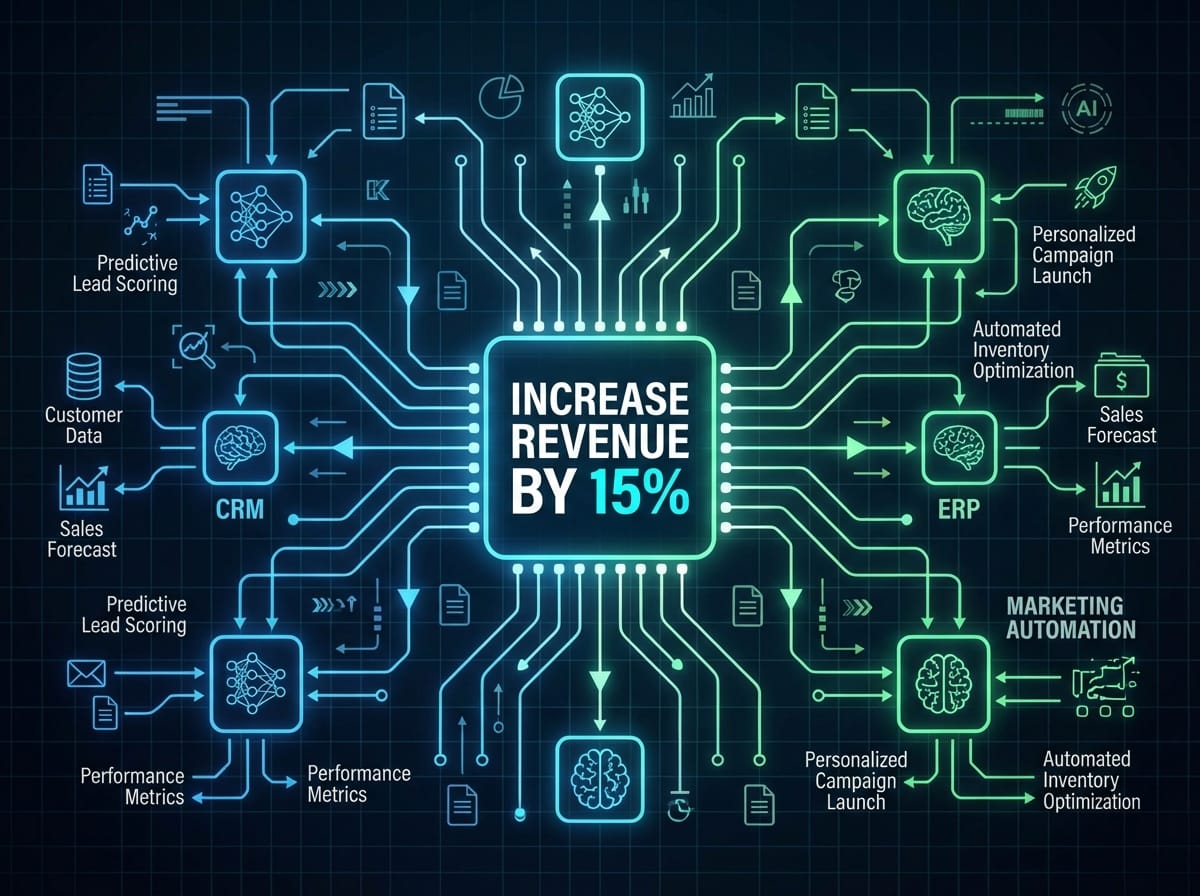
This isn't just a subtle upgrade; it's a complete re-evaluation of what we want from artificial intelligence. We're moving from the art of intelligence simulation to the science of outcome engineering. The next wave of AI won't need to explain its reasoning in verbose paragraphs; its success will be measured by the needle-moving metrics it impacts directly and autonomously.
The End of an Era: From Conversational AI to Outcome Engineering
The current generation of LLMs is defined by its process. We give it a prompt, and it generates a text-based response based on patterns in its training data. It's a sophisticated input-output mechanism that excels at tasks related to language manipulation. But for complex business operations, this model reveals its limitations. An enterprise doesn't run on well-written emails; it runs on interconnected processes, data-driven decisions, and completed actions.
Moving Beyond the Prompt-Response Loop
Outcome-driven AI, or what I call Executional AI, operates on a different principle. Instead of a conversational prompt like, "Can you give me some ideas to improve customer retention?" a leader will set a clear objective: "Decrease customer churn by 7% this quarter." The AI doesn't respond with a list of suggestions. It gets to work.
It would autonomously query the CRM to identify at-risk customers, interface with the marketing automation platform to launch a targeted re-engagement campaign, analyze the results in real-time, and adjust its strategy-all without requiring a single line of conversational fluff. It speaks the languages of APIs, databases, and software protocols far more fluently than it speaks English. Its goal isn't to be understood, but to execute the intent behind the goal.
A Lesson in Automation from a Decade Ago
I'm reminded of a project my team at IndiaNIC handled about ten years ago for a major logistics client. Their goal was to automate their entire supply chain notification system. It was a massive undertaking that took our best architects six months to design and implement. We had to manually integrate dozens of disparate systems, write complex business rules, and build brittle, hard-coded workflows. The final product was powerful, but rigid. Changing a single step in the process required weeks of development.
Today, I envision an outcome-driven AI being given the same objective: "Ensure 99.5% on-time delivery notification to all stakeholders." It would discover the relevant APIs, orchestrate the data flows, and build the logic in minutes. More importantly, if a shipping partner changes its data format, the AI would adapt autonomously instead of waiting for a developer to fix a broken connection. That's the difference between programmed automation and engineered outcomes.
Re-architecting the Enterprise for Silent Operators
Harnessing the power of outcome-driven AI requires more than just buying new software; it requires a foundational shift in how we structure our digital infrastructure and our strategic thinking. The goal is to create an environment where an AI operator can function with maximum efficiency and autonomy.
The next generation of AI won't just answer our questions; it will execute our ambitions. We are moving from intelligence simulation to outcome engineering, where success is measured in results, not responses.
To prepare for this shift, leaders must focus on creating an automation-first architecture. This means prioritizing machine-to-machine communication and ensuring that your core business systems are accessible and controllable through robust APIs. Here are the critical first steps:
- Conduct a Full API Audit: Your AI's ability to act is limited by the systems it can command. Identify which of your core platforms (CRM, ERP, marketing, finance) have comprehensive APIs and which need to be modernized.
- Standardize Your Data Governance: An AI operator needs clean, structured, and reliable data to make effective decisions. Invest in a centralized data strategy that eliminates silos and ensures data integrity across the organization.
- Shift to Outcome-Based KPIs: Evolve your team's focus from tracking activities to measuring outcomes. Define the high-level business metrics you want the AI to influence, and give it the autonomy to figure out the process.
- Foster a Culture of Trust in Automation: Your team's role will shift from manual execution to strategic oversight. Train them to manage AI-driven workflows, handle exceptions, and focus on the high-value strategic thinking that machines cannot replicate.
| Metric | Conversational AI (Current LLMs) | Outcome-Driven AI (The Future) |
|---|---|---|
| Primary Goal | Simulate understanding and generate human-like text. | Achieve a specific, measurable business result. |
| User Interaction | Dialogue-based, requiring detailed prompts. | Intent-based, requiring a clear objective. |
| Key Performance Indicator (KPI) | Engagement, user satisfaction, response accuracy. | ROI, efficiency gains, cost reduction, revenue growth. |
| System Integration | Acts as a user-friendly front-end for APIs. | Natively orchestrates multiple APIs as a core function. |
| Human Role | Prompter, user, conversational partner. | Strategist, goal-setter, exception handler. |
The Evolution to True Digital Transformation
This transition represents the final step in a long journey of business intelligence. For decades, we have been building systems to help us understand our businesses better. Now, we are building systems to actively run them for us. Consider the evolution:
- Descriptive AI: Told us what happened (e.g., sales reports).
- Diagnostic AI: Explained why it happened (e.g., BI dashboards).
- Predictive AI: Forecasted what will happen (e.g., machine learning models).
- Prescriptive AI: Suggested what we should do (e.g., recommendation engines).
- Executional AI: The final step. It takes the prescription and acts on it autonomously to achieve the desired outcome.
This final step has profound implications for product design and innovation. Future software won't just be a tool; it will be an automated service provider. Your accounting software won't just help you find savings; it will actively renegotiate with vendors. Your project management tool won't just flag risks; it will reallocate resources to prevent delays before they happen. This is the future we are building toward-one where technology transitions from a passive assistant to an active partner in value creation.
Conclusion: Are You Ready for a Silent Partner?
The chatter around Large Language Models has been deafening, and for good reason. They've shown us a glimpse of what's possible. But the most profound impact of AI will not be loud; it will be silent. It will be in the seamless optimization of supply chains, the autonomous personalization of customer journeys, and the relentless, data-driven pursuit of business objectives.
The move from conversation to execution is the most significant leap for enterprise AI we will see this decade. It's time to start thinking beyond the chatbot and begin designing the automation-first architectures that will support the silent, outcome-driven operators of tomorrow.
For over 20 years, my team at IndiaNIC has been building the robust digital foundations that enable businesses to thrive through technological change. The infrastructure we build today is the launchpad for the outcome-driven AI of tomorrow. Are you ready to move beyond the conversation and start engineering results? Let's begin that discussion.