


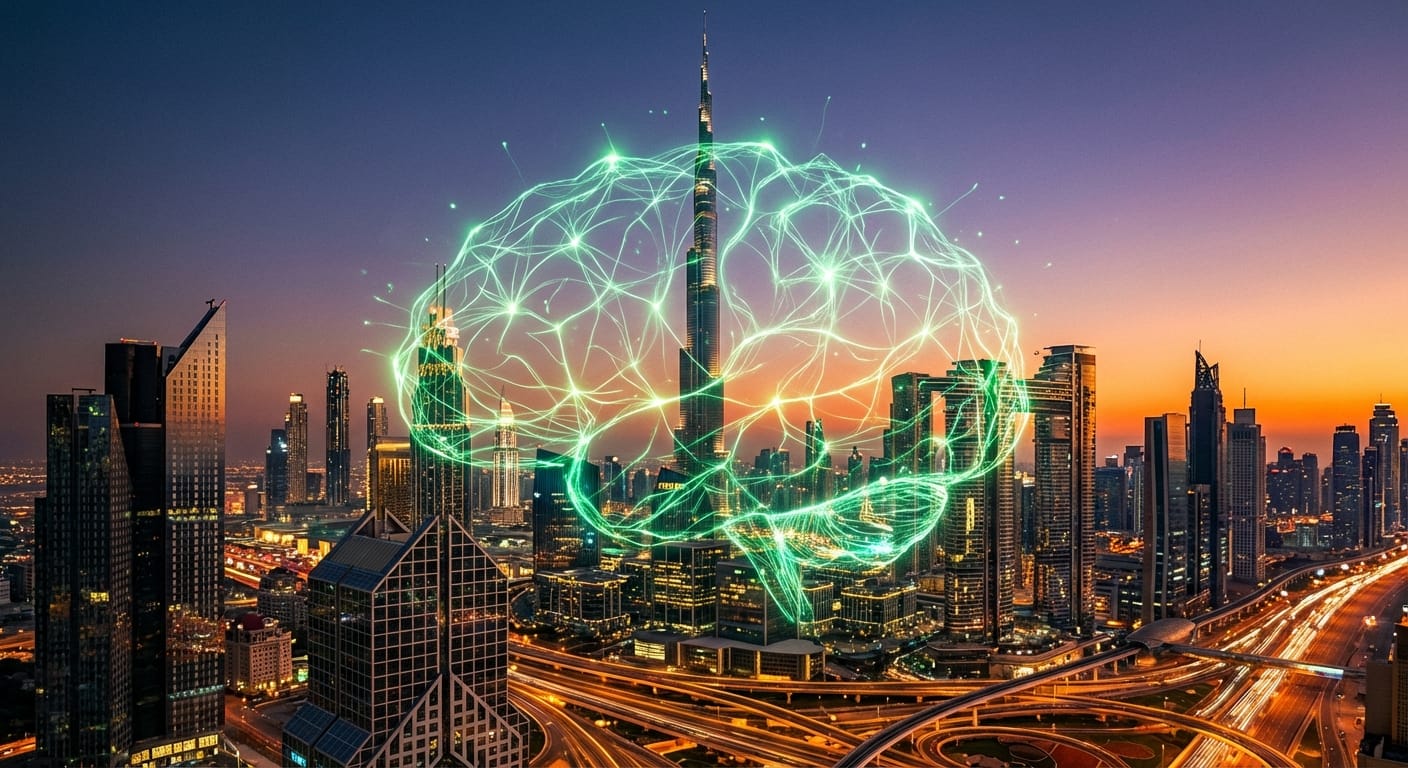
For nearly two decades, I've had the privilege of being at the forefront of the UAE's technological transformation, advising government bodies and pioneering enterprises on the strategic implementation of artificial intelligence. I've seen Dubai's skyline not just as a collection of architectural marvels, but as a living laboratory for the future. Yet, beneath the gleam of glass and steel lies a profound challenge: the immense energy required to power this vision. Our ambition to lead the world in innovation must be matched by an equal ambition to lead in sustainability.
This is the core principle behind the 'Green Dubai' initiative, a cornerstone of our national strategy. It's a bold declaration that our growth will be both smart and sustainable. However, policy and vision alone don't cool a building or dim an unnecessary light. The real work happens at the intersection of data science and infrastructure, where technology becomes the engine of environmental stewardship. It is in this critical space that companies like NICGulf are making their most significant contributions, moving beyond conventional software to deploy AI algorithms that function as the intelligent conscience of our urban hubs.
They are demonstrating that the path to a lower carbon footprint is not paved with sacrifice, but with smarter, predictive technologies that optimize our resources without compromising our quality of life.
The Smart Building Paradox: Monuments of Innovation, Magnets for Energy
Dubai is a city of superlatives. Our buildings are designed to inspire awe, but their operational complexity presents a significant environmental challenge. Traditional Building Management Systems (BMS) are rooted in a reactive paradigm; they respond to set schedules and thresholds. An office tower's air conditioning runs on a timer, regardless of whether a public holiday has left it empty. Lights blaze in conference rooms long after a meeting has ended. This is not a failure of engineering, but a limitation of an older technological model that lacks the ability to learn and adapt.
I recall an early project over a decade ago with a major government utility. We were celebrating a 5% reduction in energy consumption through automated scheduling. At the time, it was a breakthrough. But we knew it was a blunt instrument. We were telling the building what to do. Today, the paradigm has flipped. With AI, the building tells us how it can be more efficient. This evolution from static automation to dynamic, predictive optimization is the single most important leap in creating genuinely sustainable urban environments.
NICGulf's AI in Action: From Data Points to Decarbonization
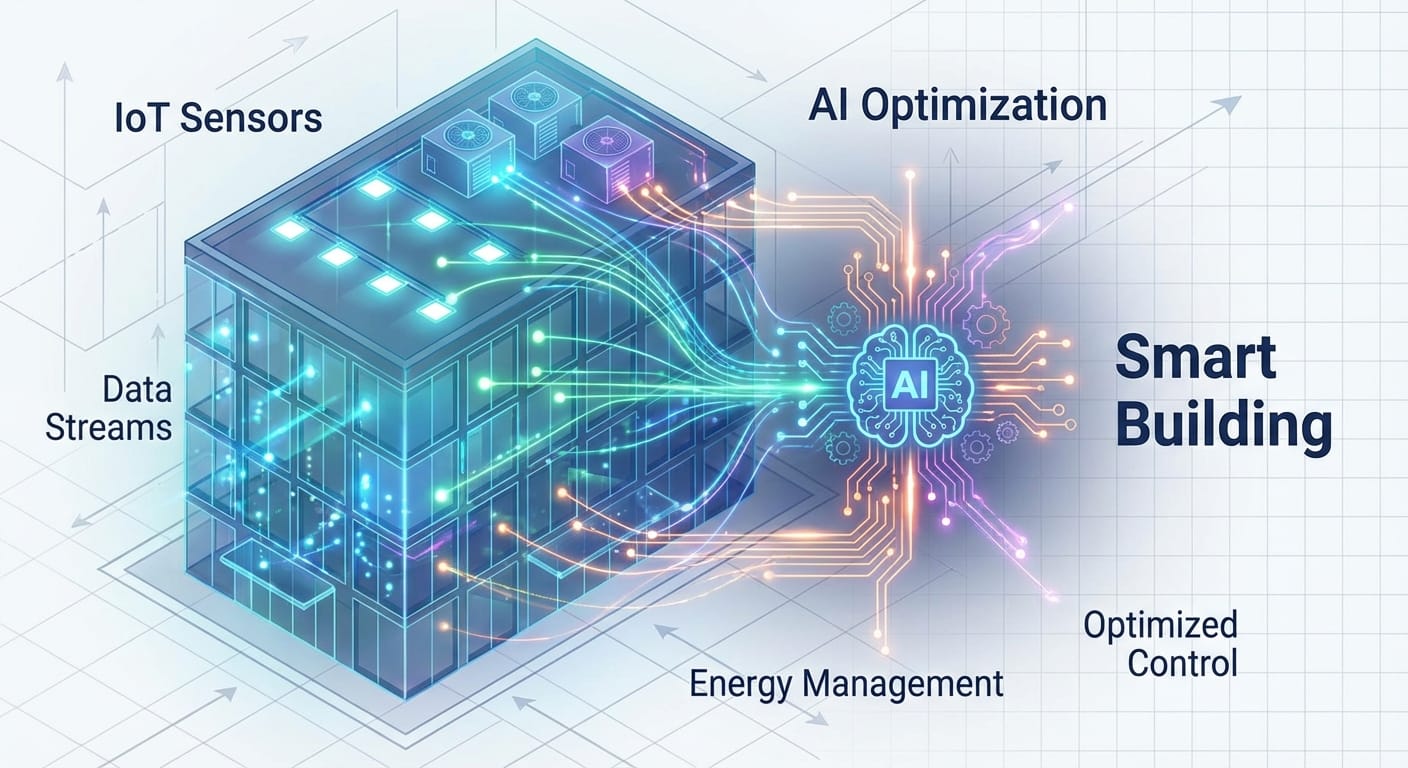
This is where the targeted expertise of NICGulf becomes indispensable. They are not simply installing sensors; they are deploying sophisticated AI algorithms that transform a building from a passive structure into an active ecosystem. Their approach is built on creating a continuous feedback loop where data is gathered, analyzed, and acted upon in real-time.
How AI Achieves Hyper-Efficiency
The process is a masterclass in applied data science, turning raw data into tangible energy savings. The algorithms perform several key functions in a seamless cycle:
- Comprehensive Data Ingestion: The AI pulls data from thousands of points-IoT sensors tracking occupancy, HVAC performance metrics, lighting usage, external weather APIs providing temperature and solar radiation forecasts, and even the building's own calendar for scheduled meetings.
- Pattern Recognition and Learning: Machine learning models analyze this data to understand the building's unique rhythm. It learns the ebb and flow of people, the impact of a hot afternoon, and the difference in energy needs between a weekday and a weekend.
- Predictive Demand Forecasting: Based on historical patterns and future data (like a weather forecast), the AI predicts the building's energy requirements for the next hour, day, or week with remarkable accuracy.
- Automated Micro-Adjustments: The system then makes hundreds of autonomous micro-adjustments. It might pre-cool an office an hour before a large meeting is scheduled, rather than blasting the AC on high when people arrive. It dims lights by 10% in an area receiving ample sunlight, a change imperceptible to the human eye but significant at scale.
A truly smart building is not just connected; it is predictive. It anticipates needs before they arise, creating an environment of seamless efficiency and turning sustainability from a goal into an automated operational reality.
The measurable impact of this AI-driven approach is profound. It moves buildings from a state of managed energy consumption to one of optimized energy performance. The difference is clearly visible when we compare the old and new models.
| Performance Area | Traditional Building Management System (BMS) | NICGulf's AI-Powered Optimization | Average Efficiency Gain |
|---|---|---|---|
| HVAC Energy Consumption | Based on fixed schedules and manual overrides | Predictive cooling/heating based on occupancy and weather | 18-25% reduction |
| Lighting Energy Usage | On/off based on timers or basic motion sensors | Dynamic dimming based on natural light and real-time presence | 20-30% reduction |
| Operational Fault Detection | Reactive; identified after system failure | Predictive maintenance alerts before failure occurs | ~40% decrease in critical equipment downtime |
| Carbon Footprint | Directly correlated with inefficient energy use | Substantially reduced through aggregate energy savings | Up to 22% overall reduction per building |
A Sustainable Blueprint for Global Cities
The work being done by NICGulf in Dubai is more than a local success story; it is a scalable blueprint for urban centers worldwide grappling with the dual pressures of growth and climate change. The principles are universally applicable. For any city planner, real estate developer, or corporate leader looking to embark on a similar journey, the path forward involves several key actions:
- Prioritize a Unified Data Architecture: Your building's systems-HVAC, lighting, security, elevators-must be able to communicate. AI thrives on integrated data.
- Invest in a Comprehensive Sensor Layer: High-quality data is the lifeblood of any AI system. You cannot optimize what you cannot measure.
- Embrace a Pilot Project Mindset: Start with a single building or campus to prove the concept, demonstrate the ROI, and build institutional knowledge before a city-wide rollout.
- Partner with AI Specialists: Effective implementation requires deep expertise in both data science and the built environment. Choose partners who understand both worlds.
Conclusion: Building a Conscientious Future
Dubai's 'Green Dubai' initiative is one of the most ambitious sustainability programs on the planet. Its success will not be measured in the grandeur of our architecture, but in the intelligence of our infrastructure. AI is the invisible force that enables this intelligence, turning our smart buildings into conscientious partners in our environmental goals. Companies like NICGulf are on the front lines, writing the code that will define the next generation of sustainable urban living.
The message to leaders across the globe is clear: the technology to build greener, more efficient cities exists today. It is intelligent, it is adaptive, and it is ready to be deployed. The time for deliberation is over; the time for implementation is now. Let us build a future where our greatest innovations serve not only our ambitions, but also our planet.