

The End of the Isolated Chatbot
San Francisco-based AI research company Anthropic has officially signaled the end of the standalone chatbot era. On January 26, 2026, the company announced a sweeping update to its Claude platform, introducing deep, interactive integrations with major enterprise productivity tools including Slack, Asana, and Figma. The move represents a strategic pivot from general-purpose conversational AI to a centralized, agentic workspace hub designed to eliminate the friction of modern digital workflows.
According to reports from ZDNET and Engadget, the new functionality allows users to interact with third-party applications directly within the Claude interface. Unlike previous iterations of AI assistants that merely retrieved information, this update enables Claude to perform actions on the user's behalf-drafting and sending Slack messages, updating project timelines in Asana, or generating diagrams in Figma-without the user ever leaving the chat window.
This development marks a significant escalation in the enterprise AI arms race. By embedding these capabilities directly into the conversational flow, Anthropic is challenging the dominance of platform-native assistants like Microsoft Copilot and Google Gemini, positioning Claude not just as a tool, but as an operating layer for the modern software stack.
Powered by the Model Context Protocol (MCP)
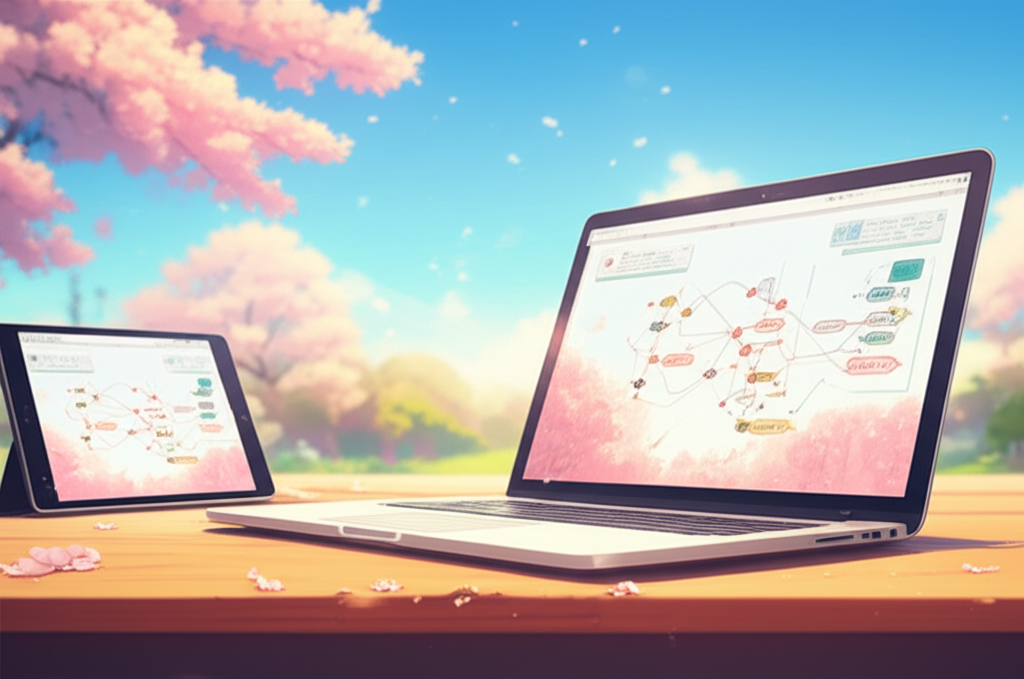
The technical backbone of this expansion is the Model Context Protocol (MCP), a standard Anthropic has been developing to facilitate secure, two-way communication between LLMs and external data sources. Digital Trends reports that this protocol allows Claude to act as a "full-on workspace," moving beyond text generation to execute complex, multi-step tasks across different applications.
"The update eliminates the tab-switching workflow that's plagued AI productivity tools. Users can now build project timelines in Asana, draft formatted Slack messages, create Figma diagrams, and query Amplitude analytics-all without leaving [the interface]." - Blockchain News
The launch partners for this initiative are a "who's who" of the SaaS (Software as a Service) world. In addition to Slack, Asana, and Figma, The Register notes that integrations are available for Amplitude, Box, Canva, Clay, Hex, and monday.com, with Salesforce support expected to follow shortly. This broad ecosystem approach suggests Anthropic is aiming to become the neutral Switzerland of AI-a platform that unifies disparate tools rather than forcing users into a single vendor's walled garden.
From Chatting to Doing: The Agentic Shift
The distinction between "chatbots" and "agents" is central to this update. While chatbots offer information, agents perform work. VentureBeat highlighted earlier beta tests of "Claude Code" in December 2025, describing how the system could read Slack messages and autonomously write code or generate pull requests. The January 2026 general release universalizes this capability across non-engineering domains.
For example, a product manager could ask Claude to "Review the design feedback in Figma, summarize the key blockers, and update the engineering sprint in Asana." Previously, this would require opening three different tabs and manually copying context between them. Now, via MCP, Claude accesses the live data in Figma, interprets the visual or textual comments, and pushes updates to the Asana API directly.
Strategic Implications for the Enterprise Market
This release addresses a critical bottleneck in AI adoption: context switching. As reported by TechCrunch and The Verge, the fragmentation of workplace tools has long been a productivity drain. By unifying these streams, Anthropic provides a compelling value proposition that differs from its primary competitors.
Microsoft's Copilot offers tight integration within the Office 365 suite (Word, Excel, Teams), and Google's Gemini dominates the Workspace ecosystem (Docs, Gmail, Drive). However, many modern enterprises use a "best-of-breed" stack-Slack for messaging, Figma for design, Asana or Jira for project management. Claude's agnostic integration layer targets these mixed-environment organizations, offering a connective tissue that platform-specific AIs may struggle to replicate due to competitive incentives.
Security and Data Privacy Considerations
With deeper integration comes heightened scrutiny regarding data security. Allowing an AI model read/write access to proprietary design files and internal communications requires robust governance. Seczine notes that alongside workplace apps, Anthropic has introduced health data connections, indicating a high level of confidence in their security protocols. However, for CIOs, the primary concern will be ensuring that "agentic" actions-such as sending messages or modifying code-are subject to human-in-the-loop verification to prevent automated errors at scale.
Outlook: The Rise of the AI Interface
The launch of interactive Claude apps signals that 2026 will be the year of the "Action Model." The novelty of text generation has faded; the market now demands utility. By successfully bridging the gap between reasoning (the LLM) and execution (the Apps), Anthropic is attempting to redefine the interface of work itself.
If successful, this shift could diminish the importance of individual app interfaces, relegating them to backend databases while the user spends their day primarily conversing with an AI orchestrator. For software developers, this necessitates a rethink of UI/UX design-building not just for human clicks, but for AI agents via protocols like MCP. As the boundaries between tools blur, Claude's latest update suggests the future of software isn't about more apps, but about a single, intelligent thread that ties them all together.