


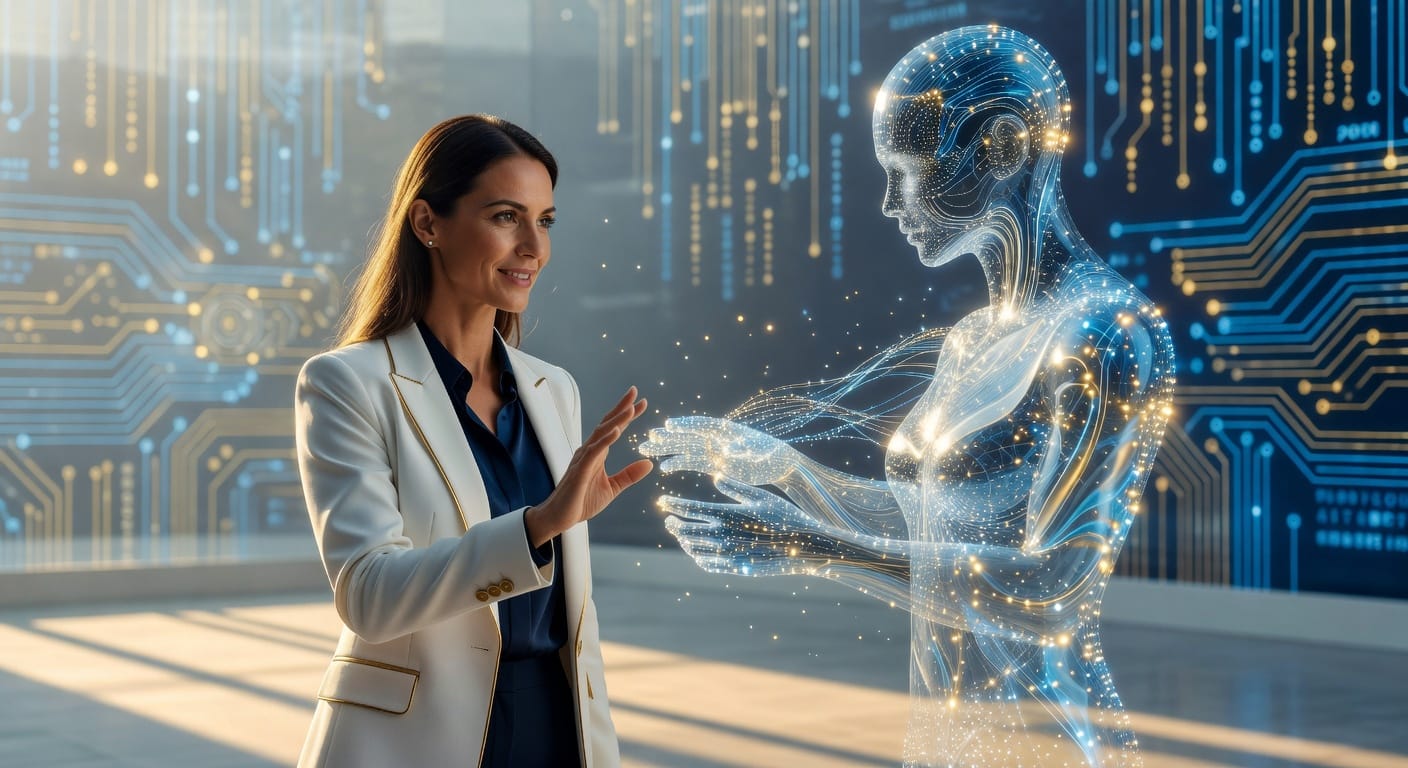
The marketing landscape is evolving at an unprecedented pace, and at the forefront of this transformation is artificial intelligence. For over 17 years, I've been immersed in driving innovation, particularly in harnessing AI's potential across public and private sectors. Today, I want to discuss not just AI as a tool, but the imminent reality of the AI marketing agent-a remote-operating, brand-aware co-pilot poised to redefine our roles.
Gone are the days when AI was merely a sophisticated automation engine for repetitive tasks. We are rapidly moving towards an era where AI acts as a true strategic partner. Imagine an AI that not only drafts compelling copy but also understands your brand's voice, orchestrates complex multi-channel campaigns, and delivers deep performance analysis-all autonomously. This isn't science fiction; it's the accelerating frontier of AI in marketing.
The Dawn of the AI Marketing Co-Pilot
The current trajectory of AI development, particularly in generative models and large language models (LLMs), has paved the way for sophisticated marketing agents. These aren't just chatbots; they are becoming autonomous entities capable of understanding context, learning brand nuances, and executing strategic marketing functions. Tools like those from OpenAI and Anthropic are already demonstrating remarkable capabilities in content generation and analysis.
Beyond Automation: Strategic Autonomy
The shift is from task automation to strategic autonomy. An AI marketing agent can now analyze vast datasets from platforms like Google Analytics to identify emerging trends, predict campaign outcomes, and even suggest strategic pivots before human marketers even spot the initial signals.
This level of autonomy frees up human marketers to focus on what AI, at least for now, cannot replicate: true creative ideation, nuanced brand storytelling, and high-level strategic vision. It's about moving from the trenches of execution to the command center of strategy.
My Journey: From Execution to Strategic Foresight
During my early years as a digital strategist, around 2012, I remember grappling with how to scale our marketing efforts without an exponentially growing team. We were using early forms of automation for email sequences and social media posting, but the manual effort in campaign setup, creative iteration, and performance analysis was immense. I recall leading a project for a major government entity where we aimed to launch a nationwide digital literacy campaign. The sheer volume of content creation and channel management was overwhelming. We were spending days, sometimes weeks, just briefing creative teams and agencies, then more time analyzing fragmented reports. If we had possessed an AI co-pilot then, capable of handling the copywriting, segmenting audiences, and orchestrating the multi-channel delivery while providing real-time performance feedback, the speed and effectiveness of that campaign would have been dramatically different. That experience solidified my belief in the power of strategic foresight and the need for advanced tools to enable it.
The Accelerating Adoption Curve
The adoption of AI in marketing is not a gradual climb; it's an exponential surge. Businesses are realizing that integrating AI isn't just about gaining a competitive edge; it's becoming a necessity for survival. Early adopters are already seeing tangible benefits, from increased efficiency to more personalized customer journeys.
According to recent research by Gartner, marketing technology spending is projected to continue its upward trend, with AI-powered solutions becoming a significant driver of this growth. This isn't a future trend; it's a present reality reshaping how brands connect with their audiences.
Implications for Marketing Roles
The rise of the AI marketing agent prompts a crucial re-evaluation of traditional marketing roles. Professionals who once focused on drafting ad copy, managing social media calendars, or compiling performance reports will find these tasks increasingly handled by AI. This doesn't mean marketers are obsolete; it means their roles are evolving.
The future demands marketers who can:
- Develop sophisticated AI prompts and train AI models for brand consistency.
- Set overarching marketing strategies and define brand narratives.
- Analyze AI-generated insights to make high-level strategic decisions.
- Oversee the ethical implications and creative direction of AI-driven campaigns.
- Foster innovation and explore new AI-powered marketing frontiers.
This shift from execution to strategy requires a proactive approach to upskilling and reskilling. Platforms like LinkedIn Learning and various online courses are crucial for staying ahead.
"The AI marketing agent is not a replacement for human creativity and strategy, but an indispensable co-pilot that amplifies our capabilities, allowing us to reach new heights of innovation and impact."
The Autonomous Campaign Manager: A Data-Driven Perspective
The concept of a fully autonomous campaign manager, powered by AI, is rapidly moving from hypothetical to tangible. These agents will be capable of end-to-end campaign management, from initial brief analysis to final performance reporting. Consider the potential:
| Marketing Function | Current Human Effort (Est.) | AI Co-Pilot Efficiency Gain (Est.) | AI Autonomous Management Potential (Est.) |
|---|---|---|---|
| Copywriting | 10-20 hrs/week | 70% reduction | 95% reduction |
| Campaign Orchestration | 15-25 hrs/week | 60% reduction | 90% reduction |
| Performance Analysis | 8-15 hrs/week | 80% reduction | 98% reduction |
These estimates, based on current AI capabilities and projected advancements by leading firms like Forrester and McKinsey, highlight the dramatic efficiency gains. The data suggests that a significant portion of manual marketing tasks can be automated, freeing up human talent for higher-value strategic and creative work.
What is Your Readiness Timeline?
The question isn't if AI will transform marketing, but when and how each of us will adapt. Are you prepared for an AI co-pilot that handles your campaign execution, allowing you to focus on visionary strategy and creative direction? Consider these steps to assess your readiness:
- Educate Yourself: Continuously learn about the latest AI marketing tools and their capabilities. Follow thought leaders and research firms.
- Experiment with AI Tools: Start small. Use tools like Semrush for AI-powered SEO insights or Adobe Sensei for creative assistance.
- Upskill in Strategy and Creativity: Focus on developing skills that AI cannot easily replicate - strategic thinking, brand storytelling, emotional intelligence, and complex problem-solving.
- Understand Data Ethics: As AI takes the lead in data analysis, ensure you are well-versed in ethical AI practices and data privacy regulations.
- Advocate for AI Integration: Be an early adopter within your organization. Propose pilot projects to demonstrate the value of AI marketing agents.
The timeline for fully autonomous campaign management will vary by industry and organization. However, the fundamental shift is already underway. The speed at which companies like HubSpot and Salesforce are integrating AI into their platforms is a testament to this acceleration.
Looking Ahead: The Future of Marketing Intelligence
The AI marketing agent represents a profound evolution in our profession. It's about augmenting human capabilities, not replacing them entirely. The professionals who thrive will be those who embrace this new paradigm, shifting their focus from the 'how' of execution to the 'why' and 'what' of strategy and creativity.
As I continue to champion AI-driven innovation from Dubai, I see immense potential for organizations that strategically integrate these intelligent partners. This is not just about efficiency; it's about unlocking new levels of creativity, personalization, and strategic impact. The future of marketing intelligence is here, and it's collaborative.
How are you preparing for this AI-driven future? What timeline do you foresee for fully autonomous campaign management in your sector? Share your thoughts and predictions below.