


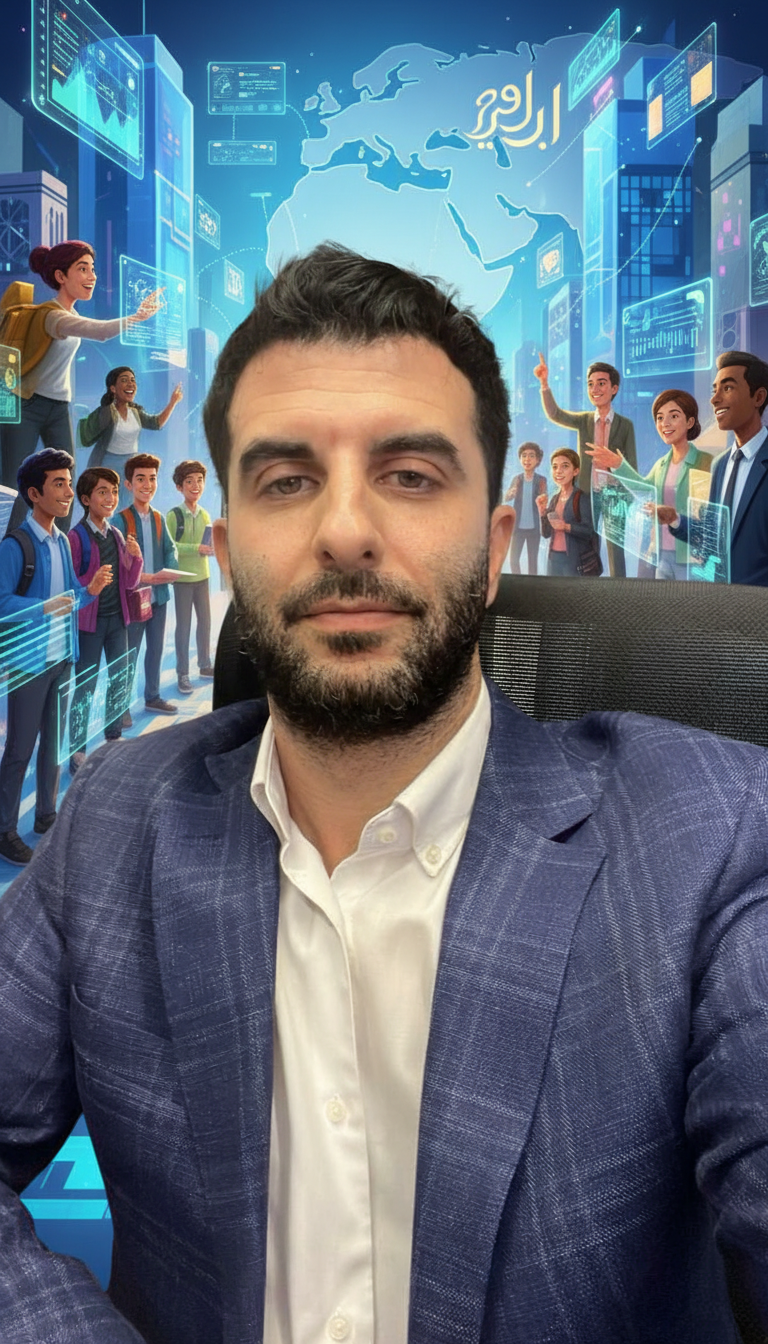
In our rapidly evolving digital landscape, the power of Artificial Intelligence is no longer a futuristic concept but a present-day reality shaping economies and societies. Here in the UAE, we've seen firsthand how strategic investment and visionary leadership can propel a nation to the forefront of technological advancement. But what about unlocking this potential across the wider Arab world? It's a question that has occupied my thoughts for years, and I'm thrilled to witness initiatives that are actively addressing this critical need. Today, I want to discuss a partnership that holds immense promise: the collaboration between WideBot AI and tech entrepreneur Ahmed El-Ghandour.
Their joint mission to democratize AI education across the Arab world is not just commendable; it's fundamentally necessary for fostering inclusive growth and ensuring the region doesn't fall behind in the global AI race. The digital economy is accelerating, and AI literacy is fast becoming a prerequisite for participation, innovation, and economic prosperity.

The Urgent Need for AI Literacy in the Arab World
Bridging the Digital Divide
The Arab world is brimming with talent and a burgeoning youth population eager to engage with cutting-edge technologies. However, a significant gap often exists between this potential and the accessible, localized education required to harness it. Traditional educational models, while foundational, often struggle to keep pace with the dynamic evolution of AI. This is where forward-thinking collaborations like the one between WideBot AI and Ahmed El-Ghandour become indispensable.
AI is not just a tool for tech giants; it's becoming an integral part of everyday business operations, from customer service to data analysis and strategic planning. Without widespread AI literacy, individuals and businesses risk being left behind, unable to leverage these transformative technologies for growth and efficiency. This can lead to a widening digital divide, exacerbating existing economic disparities.
Economic Transformation and Future-Proofing
The economic landscape across the Arab world is undergoing a significant transformation, with many nations actively diversifying away from traditional industries towards knowledge-based economies. AI is a cornerstone of this shift. Countries that embrace AI education and adoption will be better positioned to attract investment, create high-value jobs, and foster local innovation. Conversely, a lack of AI skills can hinder progress, making it difficult to compete on a global stage.
Consider the sheer potential for AI to revolutionize sectors such as healthcare, finance, logistics, and education within the region. From AI-powered diagnostics improving patient outcomes to intelligent systems optimizing supply chains and personalized learning platforms tailoring education to individual needs, the applications are vast. However, realizing this potential requires a skilled workforce capable of developing, implementing, and managing these AI solutions.
WideBot AI and Ahmed El-Ghandour: A Strategic Alliance
Empowering Through Education and Accessibility
Ahmed El-Ghandour, a visionary tech entrepreneur with a deep understanding of the Arab market's unique challenges and opportunities, has partnered with WideBot AI, a company at the forefront of AI-powered customer engagement solutions. This collaboration is built on a shared commitment to democratizing AI knowledge.
Their planned initiatives are strategically designed to address the core barriers to AI education in the region. This includes developing comprehensive workshops, creating high-quality Arabic-language resources, and fostering vibrant community programs. The goal is to make AI education accessible, engaging, and relevant to a diverse audience, from students just beginning their tech journeys to seasoned developers looking to upskill and businesses aiming to integrate AI into their operations.
Micro-Story: My Journey with AI Adoption
Over my 17+ years driving AI innovation for over 40 government entities, including crucial projects with the Prime Minister's Office and DEWA here in Dubai, I've seen the skepticism that often surrounds new technologies. I recall early discussions about deploying AI for optimizing water distribution. The initial reaction from some stakeholders was hesitant; they questioned the return on investment and the complexity of integration. However, by focusing on clear use cases, demonstrating tangible benefits through pilot programs, and investing in training for the teams involved, we were able to overcome these hurdles. This experience underscored for me the absolute necessity of not just deploying AI, but of ensuring the people who will use it are well-equipped and confident. This is precisely why the WideBot AI and Ahmed El-Ghandour initiative resonates so strongly with me.
Key Initiatives and Their Impact
Workshops and Training Programs
The partnership plans to roll out a series of practical, hands-on workshops. These sessions will cover fundamental AI concepts, machine learning basics, data science principles, and the ethical considerations of AI. By offering these programs in Arabic, they are breaking down a significant linguistic barrier that often prevents wider adoption and understanding. This localized approach ensures that the content is not only technically sound but also culturally relevant and easily digestible for a broad audience.
Arabic-Language Resources
The creation of accessible, high-quality Arabic content is a game-changer. This includes online courses, tutorials, documentation, and interactive learning modules. For many aspiring AI professionals and business leaders in the Arab world, the lack of comprehensive resources in their native language has been a major impediment. By filling this void, WideBot AI and El-Ghandour are democratizing access to knowledge that was previously out of reach for many.
Community Building and Ecosystem Development
Beyond formal education, the collaboration aims to build a thriving AI community. This involves creating platforms for knowledge sharing, networking, and collaboration among students, developers, researchers, and entrepreneurs. Such communities are vital for fostering innovation, enabling peer-to-peer learning, and creating a supportive ecosystem for AI startups and initiatives. Platforms like GitHub and Stack Overflow are testaments to the power of developer communities, and replicating this focus on AI within the Arab world is a powerful strategy.
"Democratizing AI education isn't just about teaching code; it's about empowering minds, fostering critical thinking, and enabling a generation to build the future they envision for the Arab world."
Addressing the Skills Gap and Fostering Local Innovation
The demand for AI talent is soaring globally. According to McKinsey, AI adoption is accelerating, leading to a growing need for professionals skilled in areas like data science, machine learning engineering, and AI ethics. The Arab world is no exception, and this partnership directly addresses this critical skills gap.
By equipping individuals with the necessary AI knowledge and skills, this initiative empowers them to not only find better job opportunities but also to become creators of new technologies. This fosters local innovation, encouraging the development of AI solutions tailored to the specific needs and challenges of the region. Imagine AI solutions for optimizing water management in arid regions, developing personalized educational tools for diverse learning needs, or creating intelligent systems to preserve cultural heritage.
| AI Skills Gap vs. Demand (Arab World Projection) | Estimated Demand by 2027 | Current Supply (Estimated) | Projected Gap |
|---|---|---|---|
| AI Specialists (Engineers, Data Scientists) | 350,000+ | 150,000 | 200,000+ |
| AI-Literate Professionals (Business Analysts, Managers) | 1,200,000+ | 600,000 | 600,000+ |
Steps to Building Regional AI Expertise:
- Develop localized AI curricula: Tailor educational content to reflect regional industries and challenges.
- Invest in Arabic-language AI resources: Create comprehensive online courses, documentation, and learning materials.
- Foster AI communities and hackathons: Encourage collaboration, knowledge sharing, and hands-on problem-solving.
- Facilitate industry-AI partnerships: Connect educational institutions with businesses to provide real-world projects and internships.
- Promote ethical AI principles: Ensure responsible development and deployment of AI technologies across the region.
Long-Term Impact: A Cornerstone for Inclusive Technological Advancement
The enduring impact of this partnership extends far beyond immediate skill development. By democratizing AI education, WideBot AI and Ahmed El-Ghandour are laying the groundwork for a more inclusive and innovative technological future for the Arab world. This collaboration has the potential to become a cornerstone for regional advancement, fostering a generation of AI leaders, developers, and entrepreneurs who can drive sustainable economic growth and address local challenges with cutting-edge solutions.
When education is accessible and culturally relevant, it unlocks latent potential. This initiative could spur the creation of AI startups that cater to specific regional needs, preserve cultural heritage through AI, and optimize critical resources like water and energy. The ripple effect will be felt across economies, creating new job opportunities and enhancing global competitiveness.
The future is intelligent, and it's imperative that everyone has the opportunity to be a part of it. This partnership is a powerful step in ensuring that the Arab world is not just a consumer of AI but a significant contributor and innovator in the global AI landscape. I encourage all aspiring AI enthusiasts, educators, and policymakers in the region to engage with these initiatives and contribute to this vital movement.